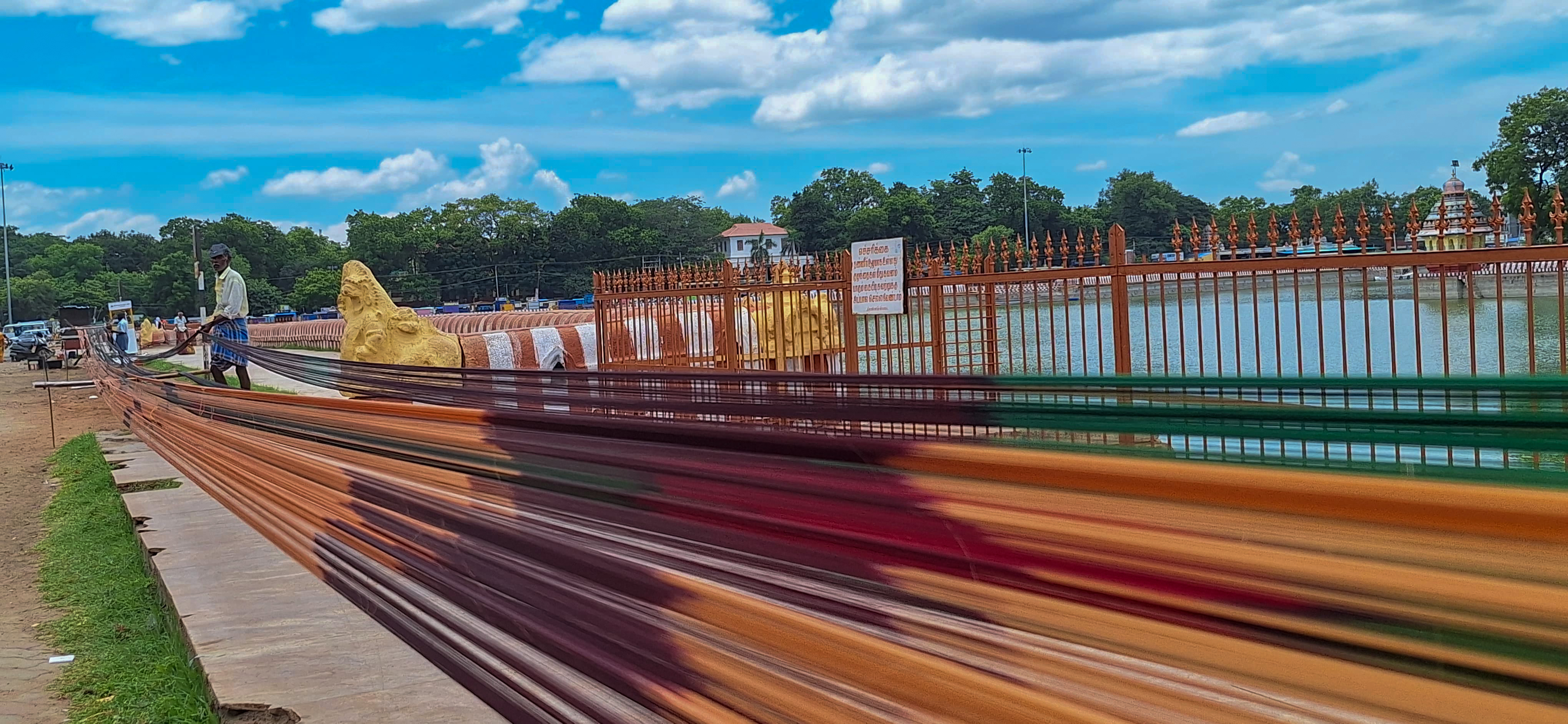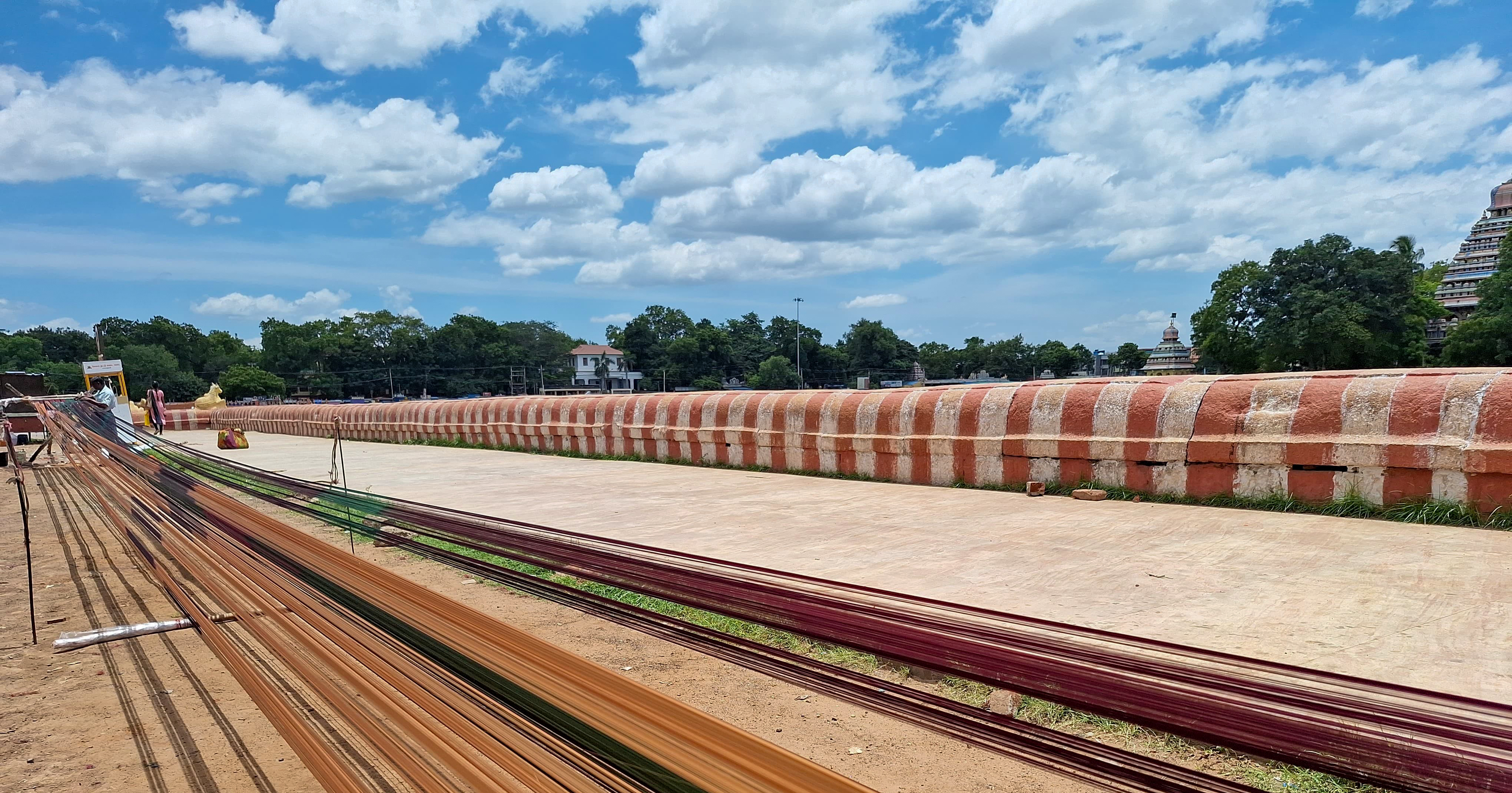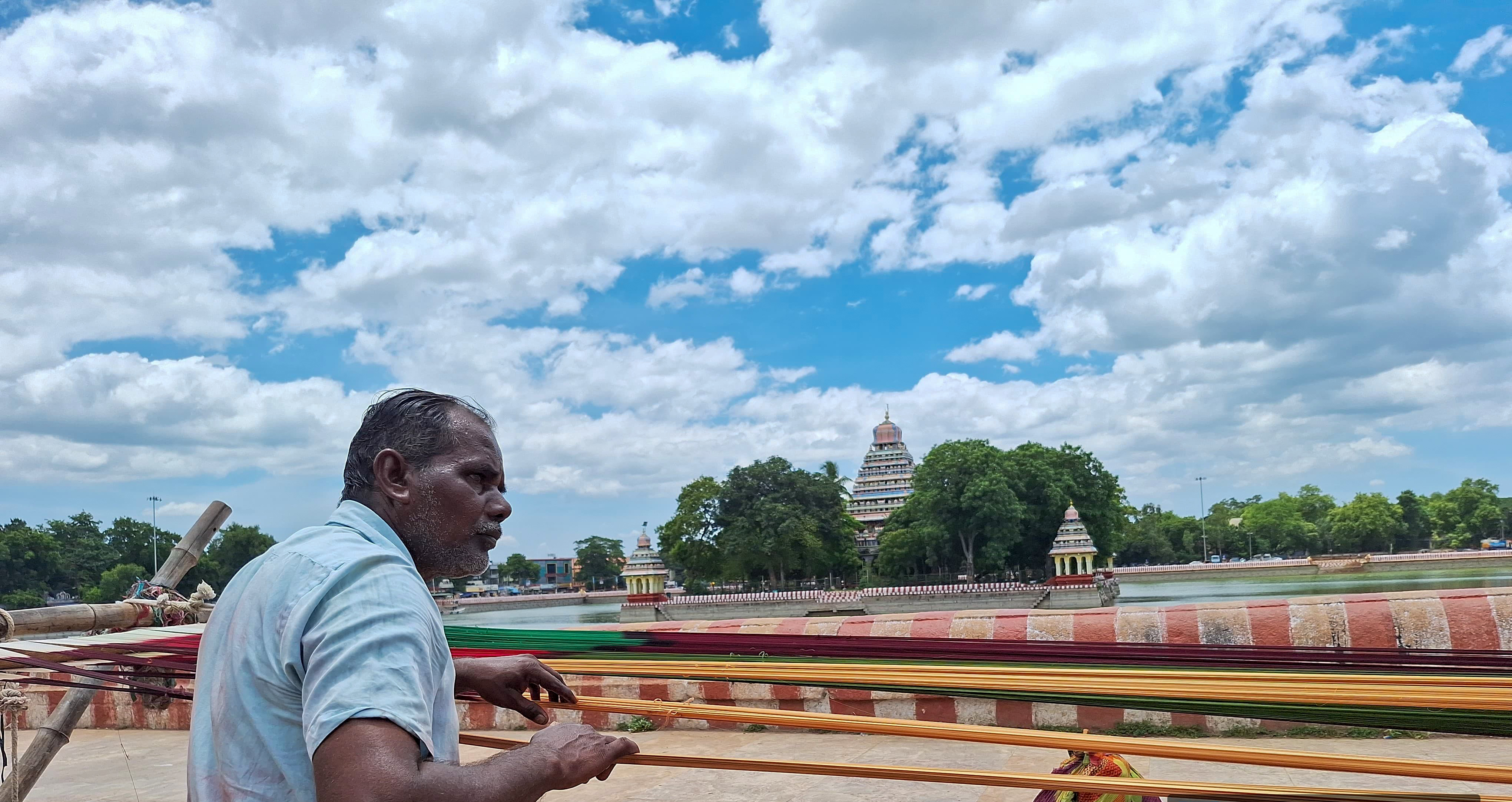
Sungudi saree making in Tamil Nadu is a time-honored tradition that features a distinctive tie-and-dye method known locally as "putta" or "bandhani." The process starts with plain cotton fabric that has been bleached and sometimes pre-printed. This fabric is then intricately tied with thousands of small, evenly spaced knots—often exceeding 20,000 on a single saree measuring over six yards. The knotted fabric is dyed using either natural colorants derived from plant materials like leaves, flowers, and bark, or synthetic dyes. Once the dyeing is complete, the knots are removed, revealing the signature circular patterns unique to Sungudi textiles. To complete the process, the pallu (loose end of a saree that is draped over the shoulder) may be decorated with designs. The majority of the people involved in this industry are from the Saurashtra community. The yarn used for it is woven on handlooms near the Vandiyur Teppakulam (temple tank).