Additional Information
Some weavers from this region are said to be originally from Hampi in Karnataka, and Sawudamman is considered their clan deity. Because of this, even today, it is said that they do not engage in weaving on Ammaavasai, which is regarded as the birthday of Sawudamman.
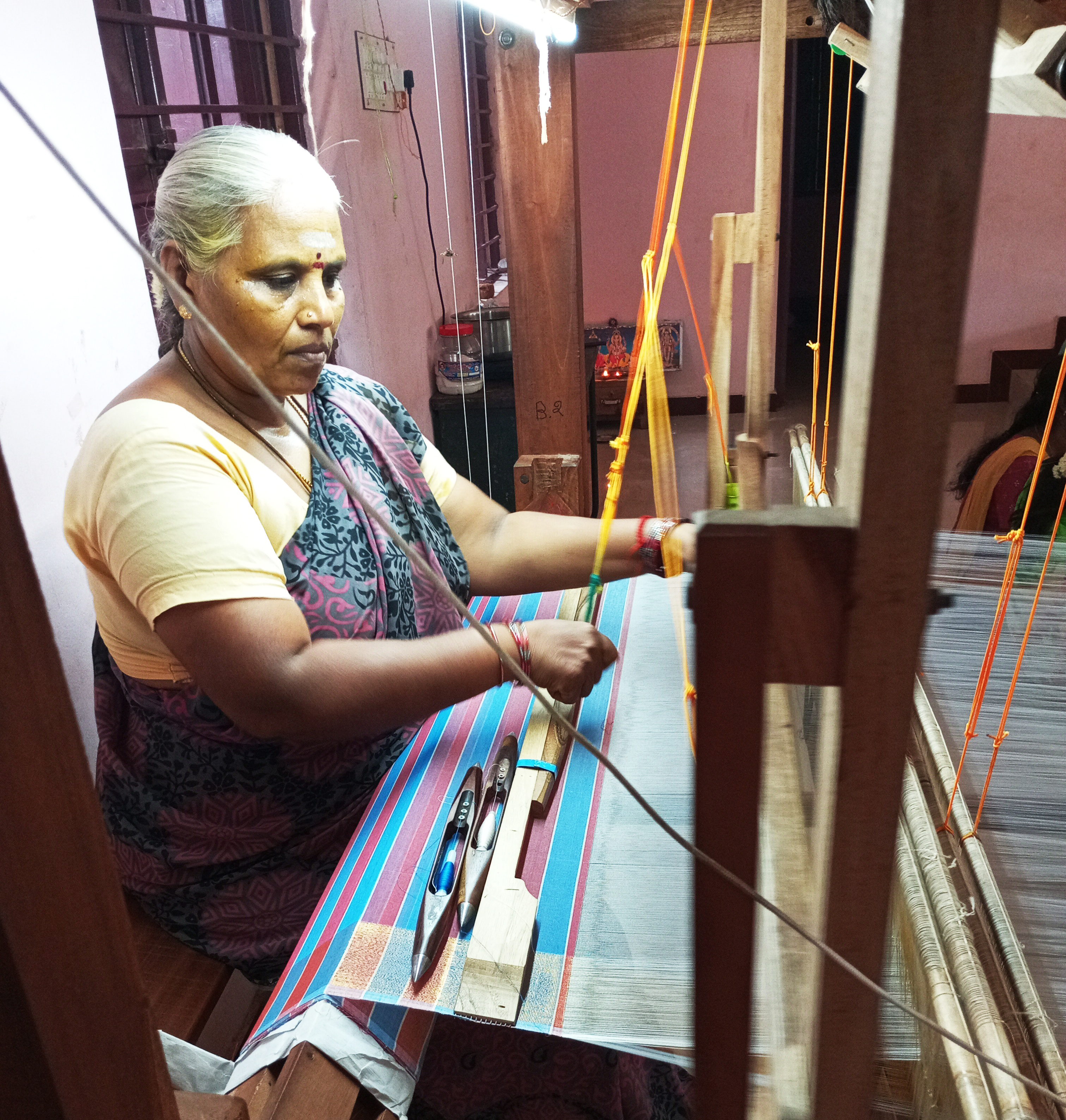
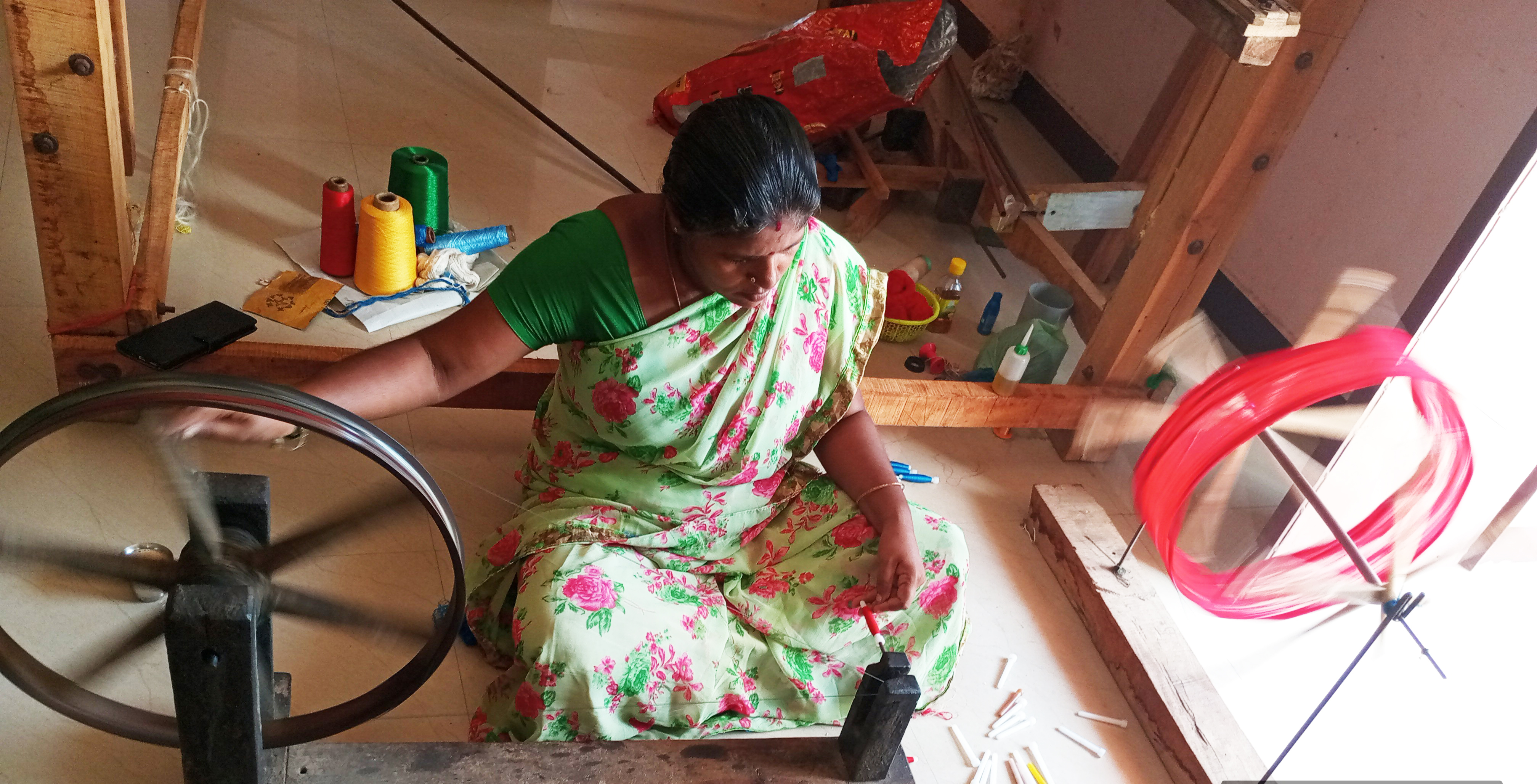
Many years ago, when khadi fabrics were produced, the weavers themselves would take the carding, combing, spinning into threads, dyeing as required, and then weave. Later, with the introduction of power looms, their traditional weaving business declined. Consequently, they shifted to producing a new type of silk called "art silk," made from rayon. This change was particularly helpful for weavers in the Dindigul and Aruppukottai areas. Later, since this too was produced on power looms as viscose, handloom weavers had to shift to other types of silk production.
Currently, the production in Chinnalapatti focuses on coarse silk. Additionally, tie-dye sarees are also produced here. White-bleached fabrics are tied with various knots, dyed in required colors, and dried in the sun. After drying, the knots are removed, revealing pre-planned designs in white where the knots had been. This process is called tie-dye (Sungudi).
Weavers report that many years ago, over 5,000 handlooms operated here, but now the industry has declined sharply, with fewer than 1,000 handlooms running. Nevertheless, approximately 60 percent of the population in Chinnalapatti is still engaged in the production of yarn, dyeing, and printing.