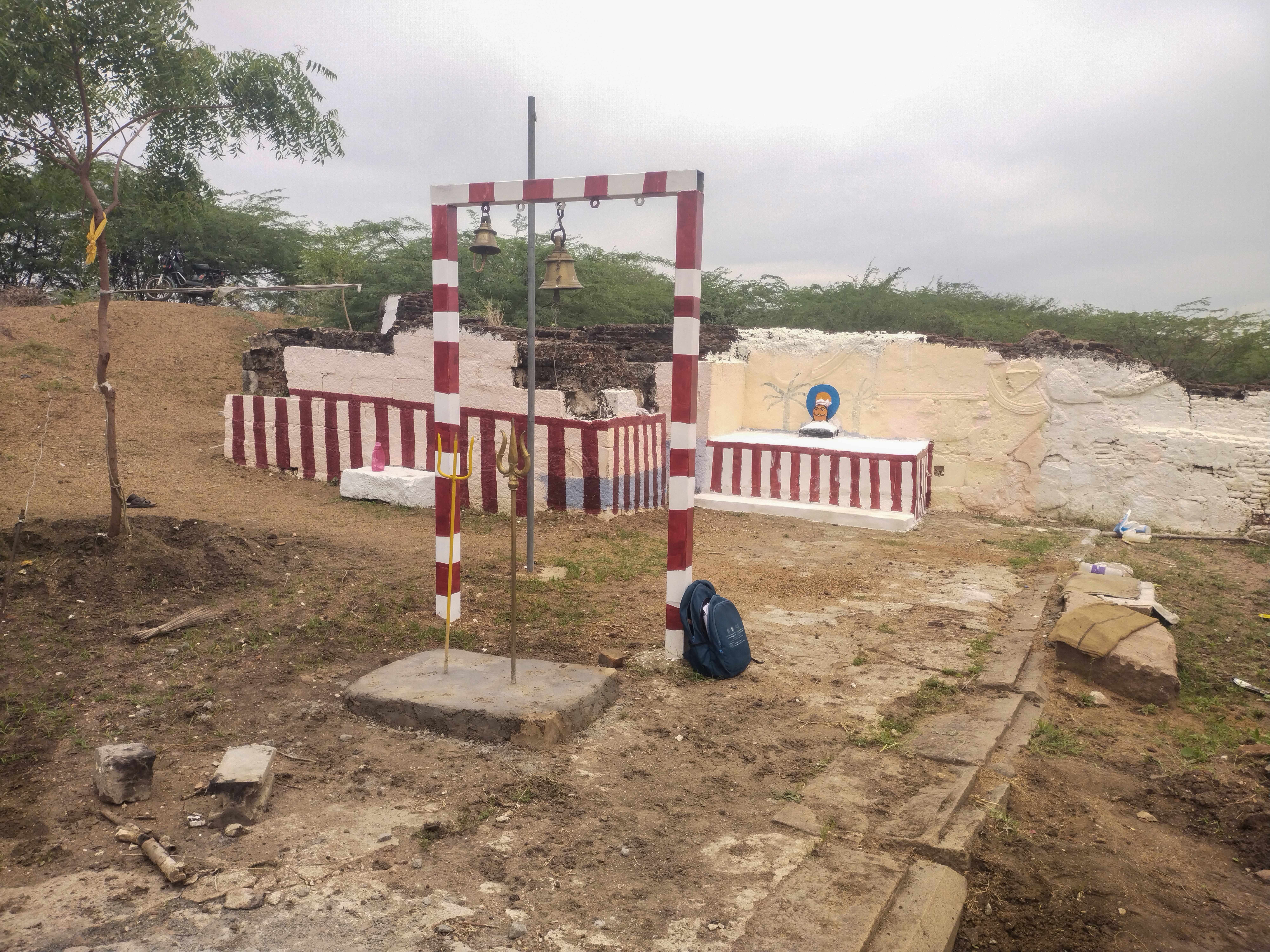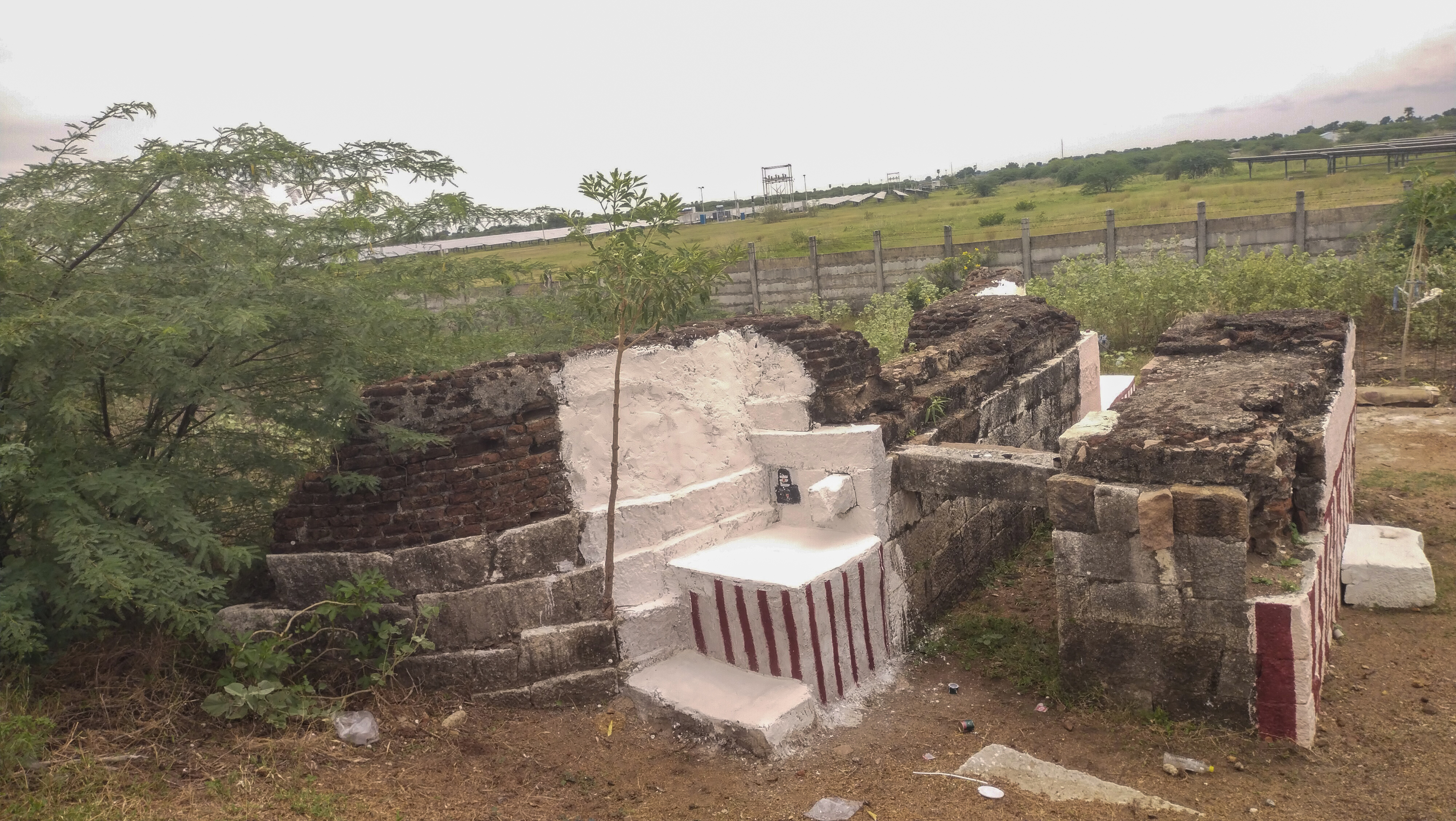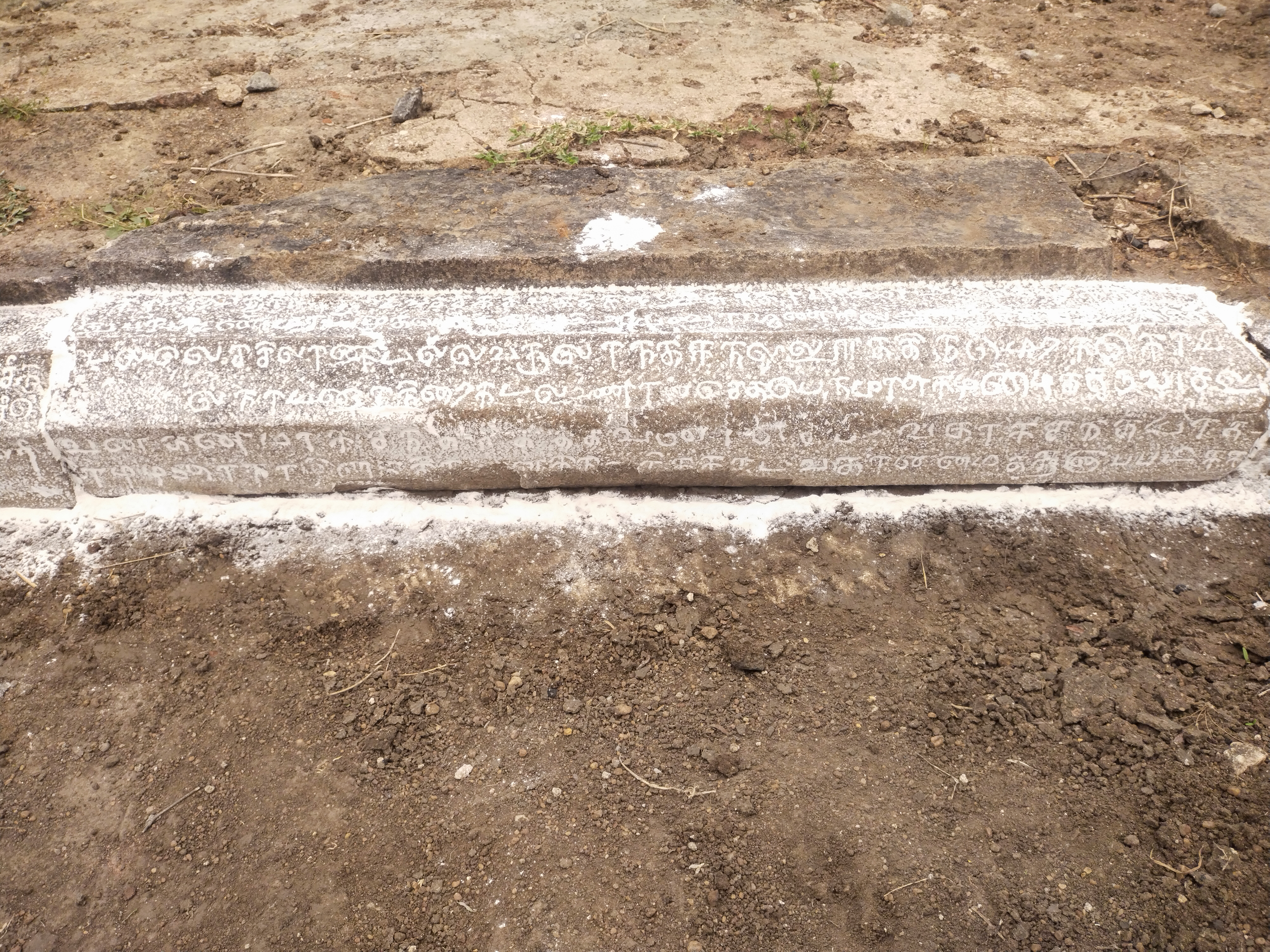
இந்தக் கல்வெட்டானது இவ்வூரிலுள்ள கண்மாயிலிருந்து நீர் வெளியேறக்கூடிய கலிங்குப் பகுதியில் காணப்படுகிறது. இந்தக் கலிங்கானது ’அழகன் குட்டை’ என்று அழைக்கப்பட்டிருப்பதை இங்குக் காணப்படும் பிற்காலக் கல்வெட்டின் மூலம் தெரிந்துகொள்ள முடிகிறது. இந்த வடிகால் பகுதியில், நான்கு துண்டுகளாக, 21 வரி கொண்ட கல்வெட்டுகள் காணப்படுகின்றன. கல்வெட்டுகளில் ’ஸ்வஸ்தி ஸ்ரீ கோமாறபன்மரான திரிபுவனசக்கரவர்த்திகள் எம்மண்டலமும் கொண்டருளிய குலசேகர பாண்டியன்....’ என்ற பாண்டிய மன்னனுடைய மெய்க்கீர்த்தி இடம்பெற்றுள்ளது. துண்டுக் கல்வெட்டு என்பதால் முழுமையான தகவல்களை அறிய முடியவில்லை. இக்கல்வெட்டின் தொடர்ச்சியும் காணப்படவில்லை. மேலும் இங்கு மாறவர்மன் சுந்தரபாண்டியனுடைய கல்வெட்டும் காணப்படுகிறது. அதுமட்டுமின்றி அளற்று நாடான பல்லச்சியைச் சேர்ந்த சிங்கள ராயன் மகள் கொற்றியம்மை கோவிலுக்கு விளக்கெரிக்க நெய் தேவைப்பட்டதால் நிலத்தானம் செய்துள்ளார் என்றும், அந்நிலத்தின் நான்கெல்லைகளூம் இக்கல்வெட்டில் பொறிக்கப்பட்டுள்ளன. மேலும் இங்கு ஒரு பெருமாள் கோவிலைச் செய்வித்துத் திருமஞ்சனம் செய்து, அதற்குச் செக்குத் தானமளிக்கப்பட்ட செய்தியும் குறிப்பிடப்பட்டுள்ளது. கல்வெட்டின் இறுதிவரியில் சமணப் பள்ளிக்குப் பள்ளிச்சந்தம் அளித்த செய்தியும் காணப்படுகிறது.
A historic year
1268 CE - 1311 CE
Additional Information
This inscription is found on the surplus weir (kalingu) of the irrigation tank (kanmāi) in this village. The later-period inscription found here indicates that this surplus weir was once called ‘Azhagan Kuttai.’ In this weir, there are four inscription fragments containing 21 lines. The inscriptions include the meikeerthi (royal panegyric) of a Pandya king, that begins with the words "Swasti Sri Kōmārapanmarāna Thiribhuvanachakravartigal Emmandalamum Kondaruliya Kulasekara Pandiyan..." Since this is a fragmentary inscription, complete details could not be deciphered, and its continuation is also missing.
Additionally, an inscription of king Maravarman Sundara Pandyan is also found here. Another record mentions that the daughter of Singala Rāyan from Pallachi in Alatru Nadu made a land donation to provide ghee for lighting lamps at the Kottriyammai temple. The boundaries of the donated land are also inscribed in this inscription. Furthermore, it records that a Perumal temple was constructed, consecrated with Thirumanjanam (ritualistic purification), and an oil press (chekku) was donated for temple use. The final line of the inscription also records a donation made to a Jain monastery (Samanapalli) in the form of palli-santham (grant).