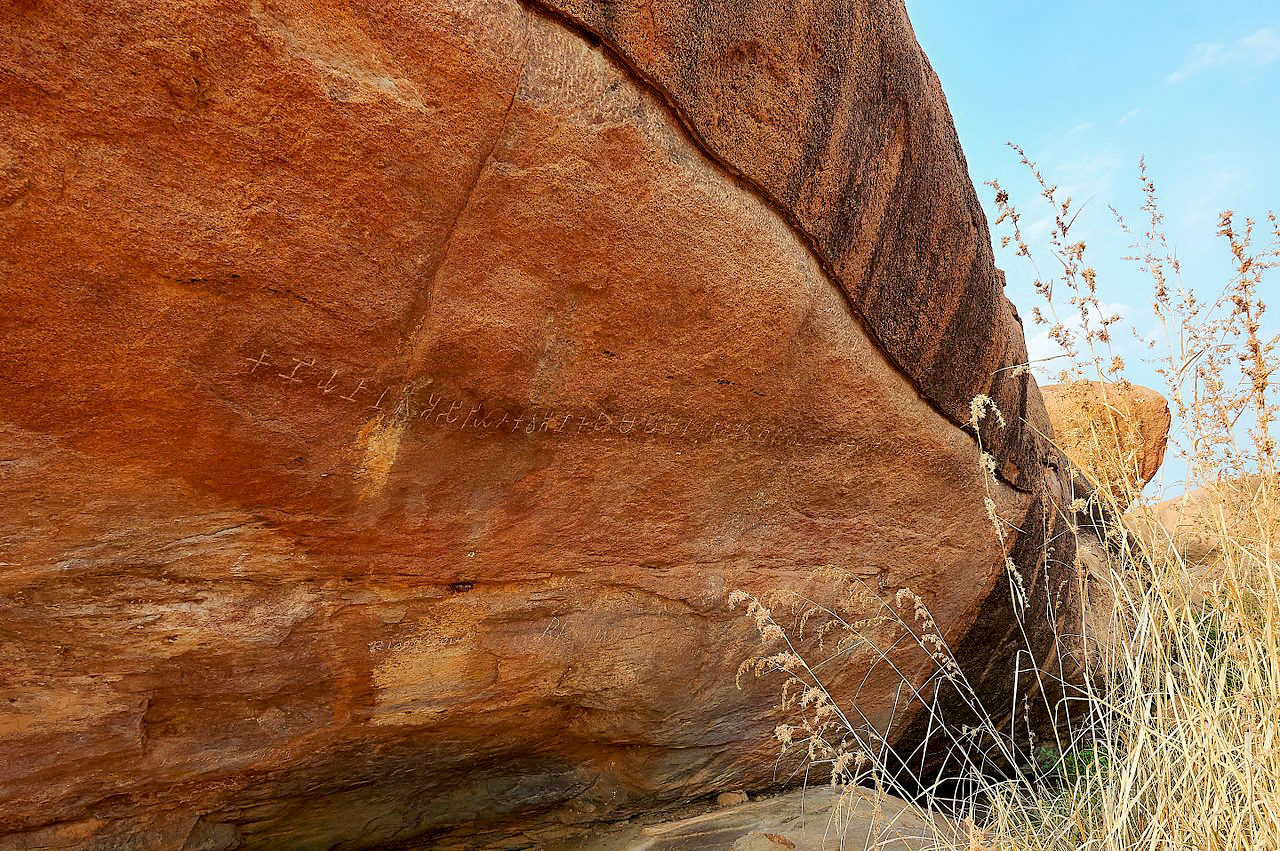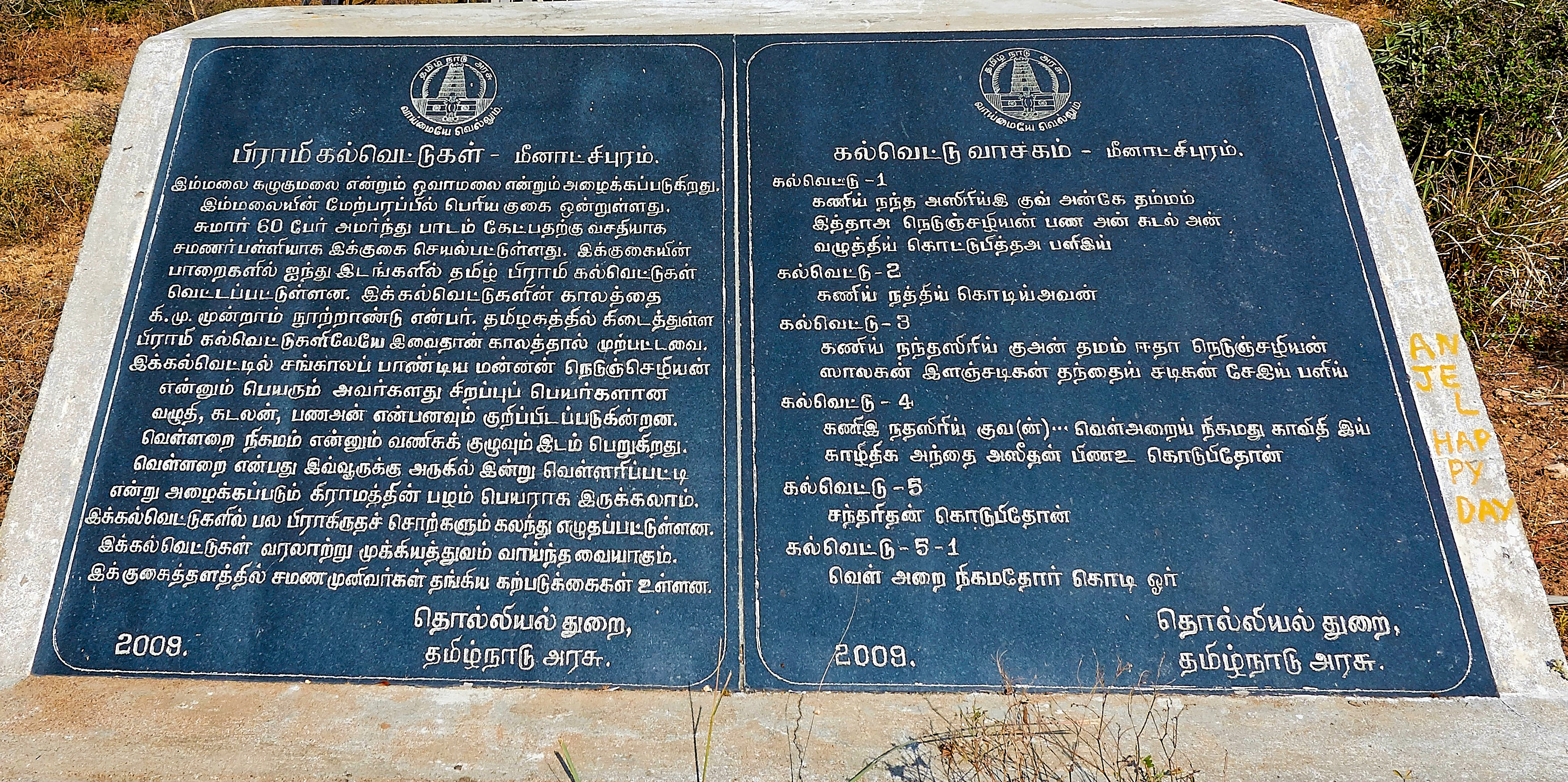
"மாங்குளம் என்ற இந்த ஊரில், கழுகுமலை என்ற மலை உள்ளது. அங்கு ஐந்து கற்ப் படுக்கைகளுடன் கூடிய இயற்கைக் குகைத்தளங்கள் உள்ளன. இவை உள்ளூரில் ""பஞ்ச பாண்டவர் படுக்கைகள்"" என்று அழைக்கப்படுகின்றன. சுமார் 2200 ஆண்டுகளுக்கு முன்பு இங்குக் 'கணிநந்தஸிரிகுவன்’ என்ற முனிவரின் தலைமையில் ஒரு துறவியர்க் கூட்டம் வாழ்ந்தது. அத்துறவிகளுக்காகக் கற்படுக்கைகள் செய்து தானமளித்தவர்களின் பெயர்கள் இங்குள்ள 6 கல்வெட்டுக்களில் குறிப்பிடப்பட்டுள்ளன. இந்தக் கல்வெட்டுகளில் நெடுஞ்செழியன் என்ற சங்கக் காலப் பாண்டிய மன்னனின் பெயரும் பொறிக்கப்பெற்றுள்ளது.
முதல் குகைத் தளத்தின் முகப்பில் இரண்டு கல்வெட்டுகள் பொறிக்கப்பட்டுள்ளன.
1ஆம் கல்வெட்டு -
”கணிய் நந்த அஸிரிய்இ குவ அன்கே தம்மம் இத்தாஅ நெடுஞ்சழியன் பணஅன் கடல் அன் வழுத்திய் கொட்டுபித்தஅ பளிஇய்” என்று குறிப்பிடப்பட்டுள்ளது. கணிநந்த ஸிரிய்குவ் அன் என்பவனுக்குத் தர்மமாக நெடுஞ்சழியனின் அலுவலனாக விளங்கிய ’கடலன் வழுதி’ என்பவன் இப்பள்ளியை உருவாக்கிக் கொடுத்தான் என்பது இதன் பொருள். 'பணஅன் ' என்ற சொல்லுக்கு அரசனின் அலுவலன் என்று பொருள்.
2 ஆம் கல்வெட்டு
“கணிய் நத்திய் கொடிய் அவன்” என்று குறிப்பிடப்பட்டுள்ளது.
கல்வெட்டில் வரும் 'கொடிய் அவன் ' என்ற சொல்லை 'கொட்டியவன் ' என்று படித்தால், முதல் கல்வெட்டை இந்தக் கணிய்நந்தி என்பவன்தான் கல்லில் பொறித்தான் (கொட்டினான்) என்ற பொருள் வரும்.
3ஆம் கல்வெட்டு
”கணிய் நந்தஸிரிய் குஅன் தமம் ஈதா நெடுஞ்சழியன் ஸாலகன் இளஞ்சடிகன் தந்தைய் சடிகன் சேஇய் பளிய்” என்ற கல்வெட்டு ’கணி நந்தஸிரிய்குவனுக்குத் தர்மமாகப் பள்ளி (கற்படுக்கை) அமைத்துக் கொடுத்தவன், நெடுஞ்செழியனின் சகலையாகிய இளஞ்சடிகனின் தந்தை சடிகன் ஆவான்’ என்று தெரிவிக்கிறது.
4 ஆம் கல்வெட்டு
“கணிஇ நதஸிரிய் குவ[ன் ] . . . வெள் அறைய் நிகமது காவிதிஇய்
காழிதிக அந்தை அஸுதன் பிணஉ கொடுபிதோன்” என்ற கல்வெட்டு 'கணி நந்தஸிரிய்குவனுக்கு வெள்ளறை நிகமத்துக் காவிதியான கழிதிக அந்தையின் மகன் அஸுதன் என்பவன் உறைவிடம் அமைத்துக் கொடுத்தான்’ என்று தெரிவிக்கிறது.
5 ஆம் கல்வெட்டு
”சந்தரிதன் கொடுபிதோன்” என்ற கல்வெட்டுக்கு ’சந்தரிதன் என்பவன் கற்படுக்கை அமைத்துக் கொடுத்தான்’ என்று பொருள்.
6 ஆம் கல்வெட்டு
”வெள்அறை நிகமதோர் கொடிஓர்” என்ற கல்வெட்டுக்கு ’வெள்ளறை என்ற ஊரைச் சேர்ந்த வணிகக் குழுவினர் (நிகமம்) இந்தக் குகைத்தளத்தைச் செதுக்கி (கொட்டி) அமைத்தனர்’ என்று பொருள்.
இக்கல்வெட்டுகள் “பட்டிபுரோலு' என்ற இடத்தில் பொறிக்கப்பட்ட எழுத்து முறையை ஒத்துப்படிக்கக் கூடிய வகையில் உள்ளன.
நந்தஸிரியக்குவன் என்ற முனிவனுக்கு பாண்டியன் நெடுஞ்செழியன் தர்மமாகப் பள்ளி அமைத்துக் கொடுத்தான் . பாண்டிய மன்னர்கள், அசோகன் கல்வெட்டில் குறிப்பிடுவது போன்று, பொது ஆண்டுக்கு முன் மூன்றாம் நூற்றாண்டளவிலேயே மிகச் சிறப்புடன் இருந்திருக்கின்றனர் என்பதை இக்கல்வெட்டு காட்டுகிறது. வழுதி என்பது பாண்டியரது குடிப்பெயராகும் . கடலன் என்பதற்கு நெய்தல் நிலத்தினையும் பணவன் என்பதற்கு மருத நிலத்தினையும் உடையவன் என்று பொருள் கூறலாம் . இக்கல்வெட்டில் வணிகர்களுக்குரிய பட்டங்களில் ஒன்றாகிய “காவிதி' என்ற சொல் வருவது குறிப்பிடத்தக்கது. இக்கல்வெட்டில் குறிப்பிடப்படும் 'நிகமம் ' வணிக நகரத்தினைக் குறிக்கும் பழஞ்சொல்லாகும்.
A historic year
2nd century BCE
Additional Information
In the village of Mangulam, there is a hill known as Kazhugumalai. On this hill, there are five natural cave shelters featuring stone beds, locally referred to as the "Beds of the Pandavas." Around 2200 years ago, a monastic community lived here under the leadership of a monk named Kaninandāsirikuvan. The names of the patrons who sponsored the carving of these stone beds for the monks are recorded in 6 inscriptions found at the site. Among them, one inscription also mentions Nedunchezhiyan, a Pandya king from the Sangam period. Two inscriptions are engraved on the façade of the first cave site.
1st inscription
"Kaniy nandha Asiriyi Kuva Ankē Dammam Ittā A Nedunchezhiyan Pana An Kadal An Vazhuththiy Kottupitha A Pali-i."
This means that Kadal-an Vazhutthi, an officer of King Nedunchezhiyan, donated and arranged for the creation of the stone bed (palli) as a religious gift (dhamma) for Kaninandāsirikuvan.
The term "Pana An" refers to a royal official.
2nd inscription
"Kaniy Naththi Kottiy Avan".
If "Kottiy Avan" is read as "Kottiyavan", it suggests that Kaninandi himself commissioned the carving of the first inscription on the rock.
3rd inscription
"Kaniy Nandasiriy Ku An Dhammam Īthā Nedunchazhiyan Sālagan Ilanchadigan Thandaiy Chadigan Se Iy Paliy"
It states that the stone bed (paḷḷi) was established as a charitable act (dharma) for Kaninandāsirikuvan, by Chadigaṉ, the father of Ilanchadigan, who was a Sālakan of Nedunchezhiyan.
4th inscription
"Kani I Nadhasiriy Kuva[n]... Vel Araiy Nigamathu Kāvithi Iy Kāzhithika Andhai Asūthan Pina-U Kotupithōn".
This suggests that Asuthan, the son of Kazhithika Andai, who was a Kāvithi of the Vel Arai merchant guild (Nigamam), established a residence for Kaninandāsirikuvan.
5th inscription
"Sandharithan Kottupithōn"
This means that Sandharithan commissioned the carving of a stone bed.
6th inscription
"Vel Arai Nigamathōr Kotti Ōr"
This indicates that members of a merchant guild (Nigamam) from the village of Vel Arai carved and established this rock shelter.
These inscriptions closely resemble the script style found at Battiprolu, suggesting a shared or comparable epigraphic tradition.
The Pandya king Nedunchezhiyan established a stone bed (paḷḷi) as an act of dharma for the monk Nandasiriyakkuvaṉ. This inscription shows that the Pandya rulers were already flourishing in the 3rd century BCE, much like what is mentioned in Ashokan edicts.
The term Vazhuti is a clan name associated with the Pandyas. The word Kadalaṉ may be interpreted as “one who is of the coastal (neythal) land,” and Paṇavaṉ as “one who is of the agricultural (marutam) land.”
Notably, this inscription features the word "Kāvithi," a term associated with merchant titles. The term "Nigamam" mentioned here is an ancient word referring to a commercial town or market center.