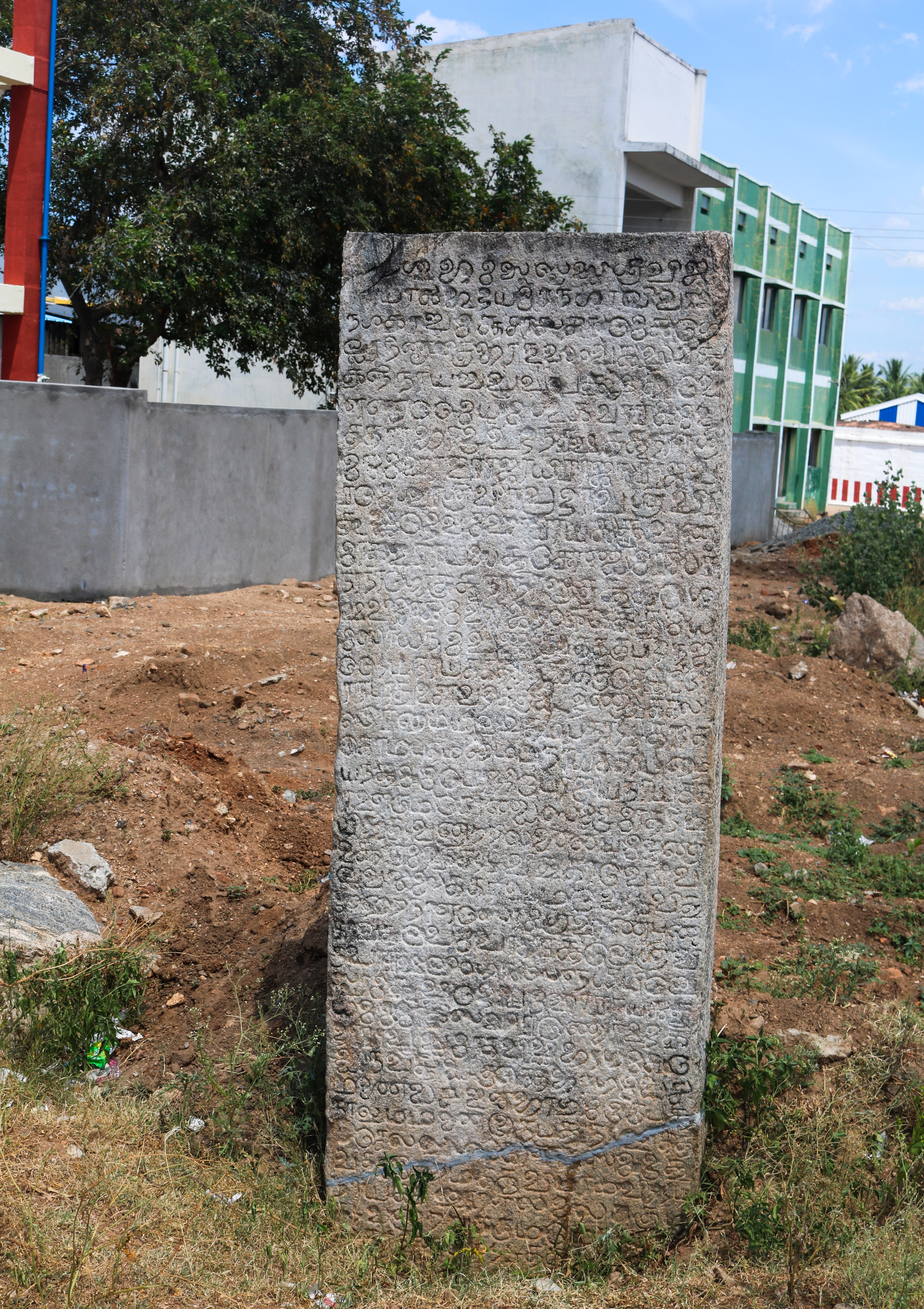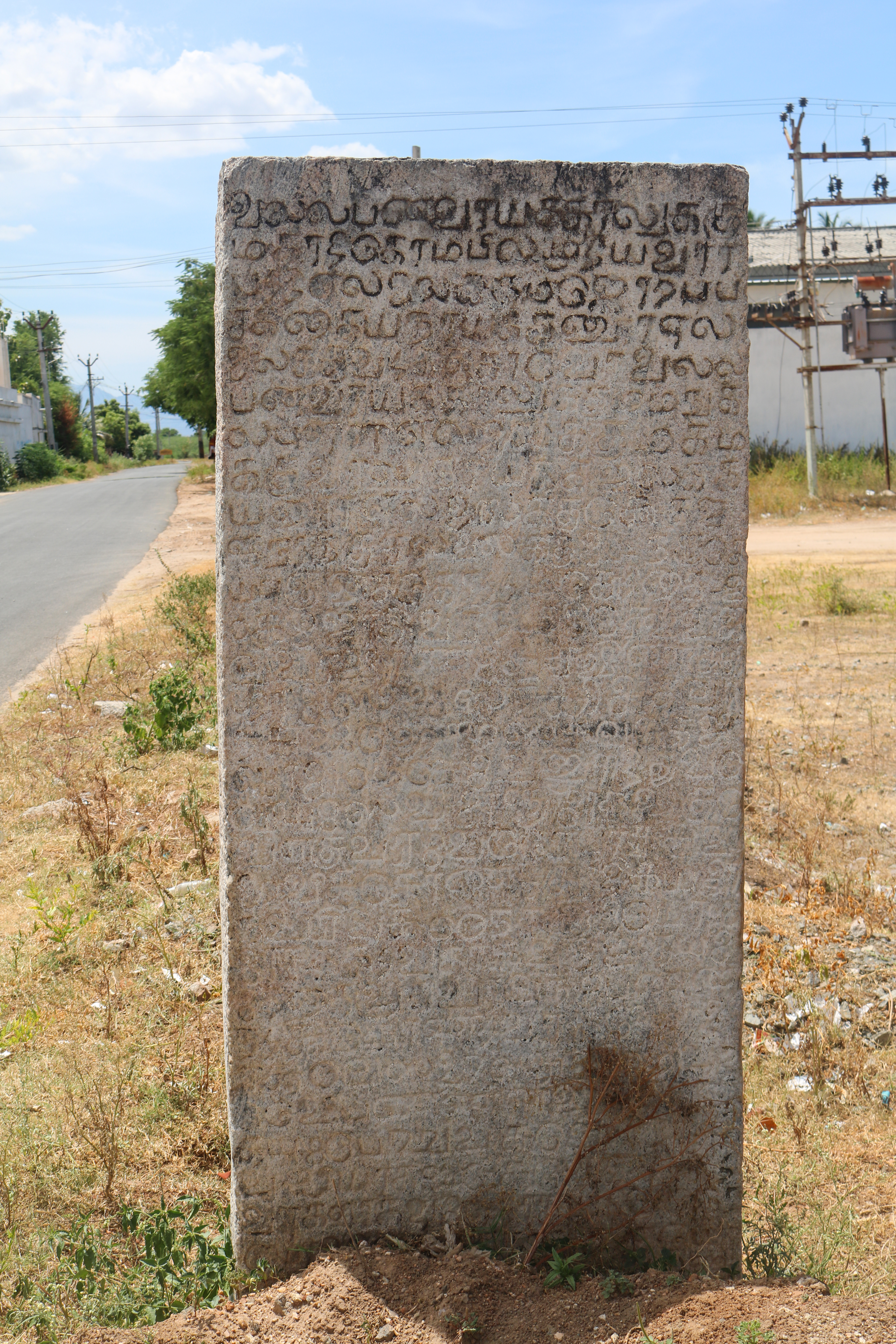
திண்டுக்கல்லிலிருந்து கரூவூருக்குச் செல்லும் பண்டைய பெருவழியில் இவ்வூர் உள்ளது. இவ்விடத்தில் மன்னர் கிருஷ்ணதேவ மகாராயர் காலத்தைச் சேர்ந்த, பொது ஆண்டு 1522ஆம் ஆண்டுக் கல்வெட்டு ஒன்று உள்ளது. இக்கல்வெட்டு கிருஷ்ணதேவராயருக்குப் புண்ணியமாகப் பொட்டி பொம்மைநாயக்கனூர், கொண்டசமுத்திரம் ஆகிய இரண்டு ஊர்களைத் தானமாகத் தந்ததைத் தெரிவிக்கிறது. கிருஷ்ணதேவராயர் காலத்திற்கு முன்பு குடகனாற்றின் குறுக்கே கட்டப்பட்டிருந்த அணை சிதைவுற்றது என்றும், பொது ஆண்டு 1522இல் மீண்டும் இவ்வணை புதுப்பித்துக் கட்டப்பட்டு அதிலிருந்து 'காவிரிவல்லவன் வாய்க்கால்' என்ற பெயரில் வாய்க்கால் ஒன்று வெட்டப்பட்டது என்றும் இக்கல்வெட்டு தெரிவிக்கிறது. தெலுங்குபேசும் மக்களின் குடியேற்றத்தால் ’தாடிக்கொம்பு’ என்ற தெலுங்குப் பெயர் இவ்வூருக்கு ஏற்பட்டிருக்க வேண்டும். தாடிக்கொம்பு என்பதற்கு பனைக்கூட்டம் என்று பொருள் (தாடி = பனை, கொம்பு = கூட்டம்) இதனால் புராண வரலாற்றிலும் இவ்வூர்க்குத் 'தாலவனம்' என்று பெயரிடப்பட்டுள்ளது. ஏனெனில் ’தாலம்’ என்பது பனையை, குறிப்பாகக் கூந்தல்பனையைக் குறிக்கும் சொல்லாகும்.
A historic year
1522 CE.
Additional Information
This village is located on the ancient trade route from Dindigul to Karur. At this place, there is an inscription dating back to the reign of King Krishnadeva Maharayar, from the year 1522 CE. This inscription records that two villages, Potti Bommaināyakkanūr and Kondasamudram were donated in honour of Krishnadevarayar. It also states that a dam, which had originally been constructed across the Kudaganāṟu before Krishnadevaraya’s time, had fallen into disrepair. In 1522 CE, this dam was rebuilt and a canal called the "Kāviri Vallavan Vāikkāl" was excavated from it.
Due to the settlement of Telugu-speaking people in this area, the village came to be known by the Telugu name "Thādikkombu"—meaning a cluster of palm trees (Thādi = palm, kompu = cluster). For this reason, in traditional or legendary accounts, the place has also been referred to as "Thālavanam", since the word "thālam" signifies the palm tree, particularly the kūntal panai palm tree.