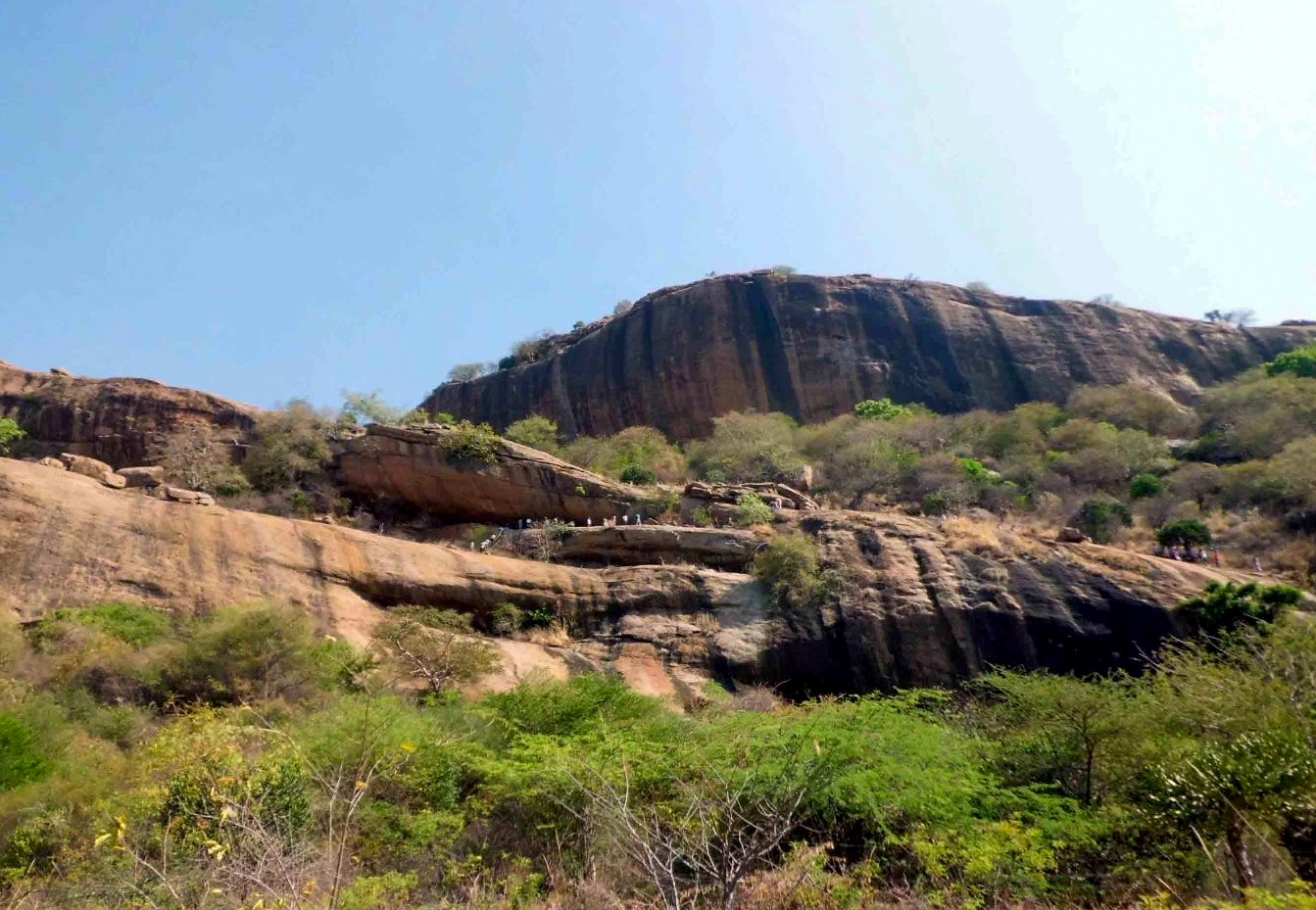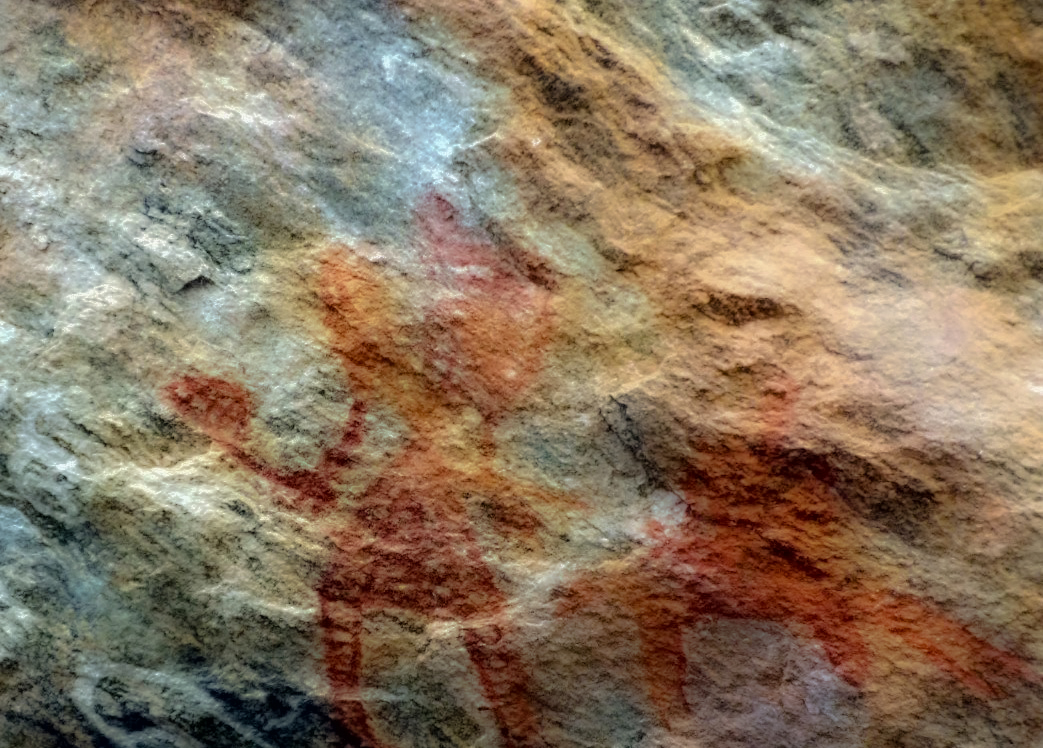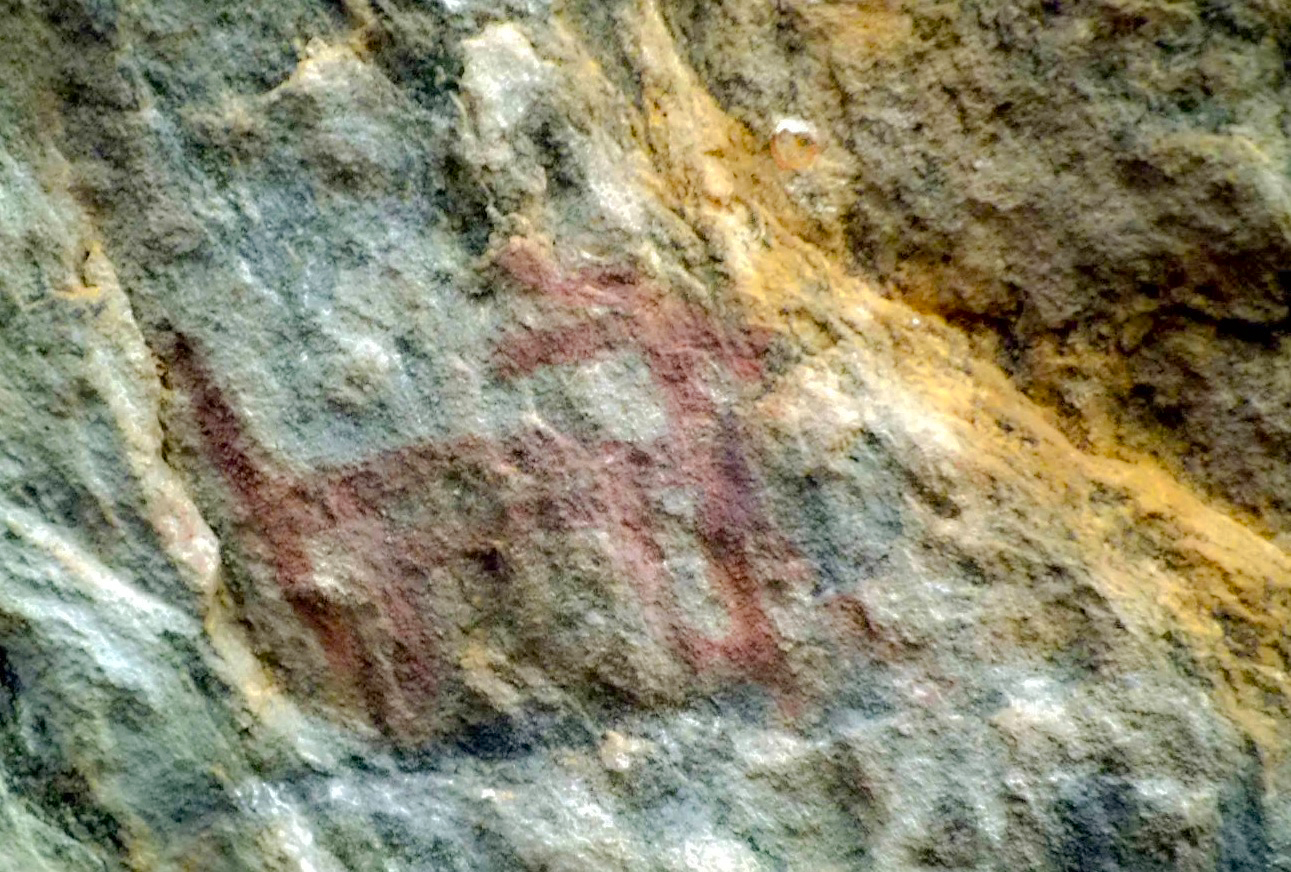
அழகர் மலையில் உள்ள பஞ்ச பாண்டவர் குகையின் விதானத்தின் மேற்குப்பக்கத்தில் சில பாறை ஓவியங்கள் ஆங்காங்கே சிவப்பு வண்ணங்களில் வரையப்பட்டுள்ளன. அவை புதிய கற்காலம் / பெருங்கற்காலத்தைச் சேர்ந்த பாறை ஓவியங்களாகக் கருதப்படுகின்றன. இங்கு மொத்தம் 13 இடங்களில் பாறை ஓவியங்கள் இருந்ததாக ஆய்வாளர்கள் தெரிவிக்கின்றனர். அவற்றுள் சில சிதிலமடைந்து விட்டன. இவ்வோவியங்களில் தனியாக மனித உருவங்களும், விலங்கு உருவங்களும், மனிதனும் விலங்குகளும் சேர்ந்துள்ள உருவங்களும், சில குறியீடுகளும் காணப்படுகின்றன. இங்குள்ள அனைத்து ஓவியங்களும் கோட்டோவியமாகவே உள்ளன. இரு முக்கோண வடிவைக் கொண்ட மனித உருவங்கள் இங்குக் காணப்படுகின்றன.
மேலும், கோட்டோவியத்தின் உட்புறம் வண்ணங்கள் கொண்டு நிரப்புவதற்குப் பதில் சிறுகோடுகளால் உடம்பின் உட்புறங்கள் நிரப்பப்பட்டுள்ளன. கலைமான் உருவம் இரண்டு இடங்களில் காணப்படுகிறது. இது வேட்டைச் சமூகத்தின் குடியிருப்பை உணர்த்துவதாகக் கருதலாம். மற்றோர் ஓவியத்தில் குதிரை அல்லது யானை போன்ற ஒரு விலங்கின்மீது கோடரியேந்தியபடி ஒரு மனித உருவம் அமர்ந்திருப்பது காணப்படுகிறது. இக்குகையில் பொ.ஆ.மு. 2ஆம் நூற்றாண்டைச் சேர்ந்த கற்படுக்கைகளும், தமிழ்ப் பிராமிக் கல்வெட்டும், பொ.ஆ. 9ஆம் நூற்றாண்டைச் சேர்ந்த சமணச் சிற்பமும், வட்டெழுத்து கல்வெட்டும் காணப்படுகின்றன. கிடாரிப்பட்டி பகுதியில் சமணர் வருகைக்கு முன்பே இனக்குழுச் சமூகங்கள் வாழ்ந்து வந்ததை, இப்பாறை ஓவியங்கள் தெரிவிக்கின்றன.
Additional Information
On the western side of the the Pancha Pandava Cave, located in the Azhagarmalai hill, some paintings can be seen drawn in red pigments. These are considered to be rock paintings from the Neolithic / Mesolithic period. Researchers state that there were a total of 13 locations with rock paintings here, some of which have now deteriorated.
These paintings depict individual human figures, animal forms, combined human-animal figures, and some symbolic marks. All the paintings here are line drawings. Human figures in triangular forms are visible. Instead of filling the interiors of these outlines with colors, the inner portions are filled with fine lines. Images of the reindeer (kalai maan) are seen in two places, which could be indicative of a hunting community’s habitation.
In another painting, a human figure is shown seated on an animal resembling a horse or elephant, holding an axe. Within this cave, stone beds dating to the 2nd century BCE, a Tamil-Brahmi inscription, a Jaina sculpture from the 9th century CE, and a Vatteluttu inscription can also be found. These rock paintings suggest that indigenous communities lived in the Kidaripatti region even before the arrival of the Jains.