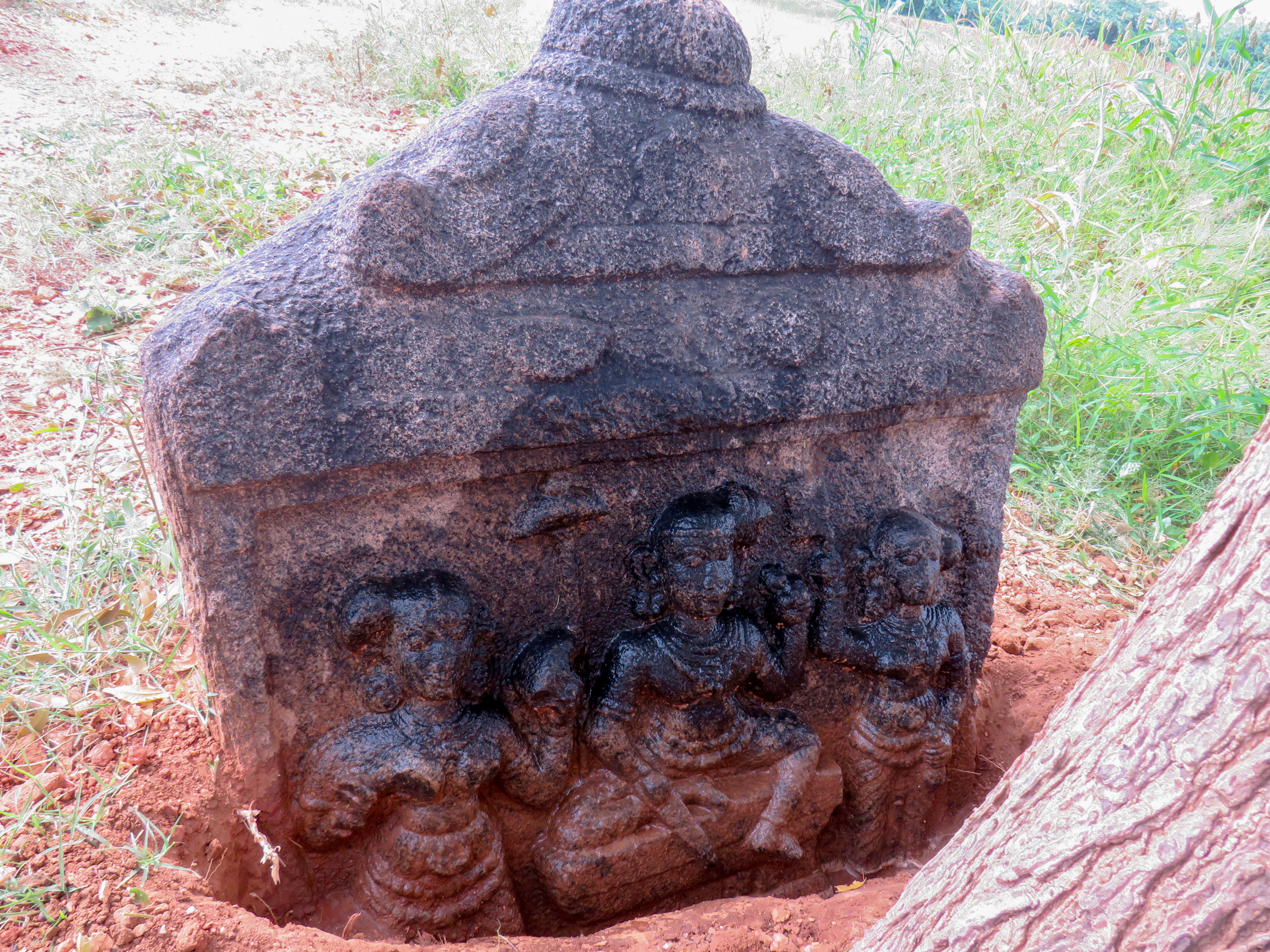
In the agricultural field on the right side of the road leading from Andipatti to Velappar Temple.
worship
3.5 feet in height, 2.5 feet in width.
Village Name
Pitchampatti
District
Theni
கல்வெட்டுகள்
இல்லை
காலம் / அரசன்
பொது ஆண்டு 16 -17ஆம் நூற்றாண்டைச் சேர்ந்ததாக இருக்கலாம் எனக் கருதப்படுகிறது
கூடுதல் விவரங்கள்
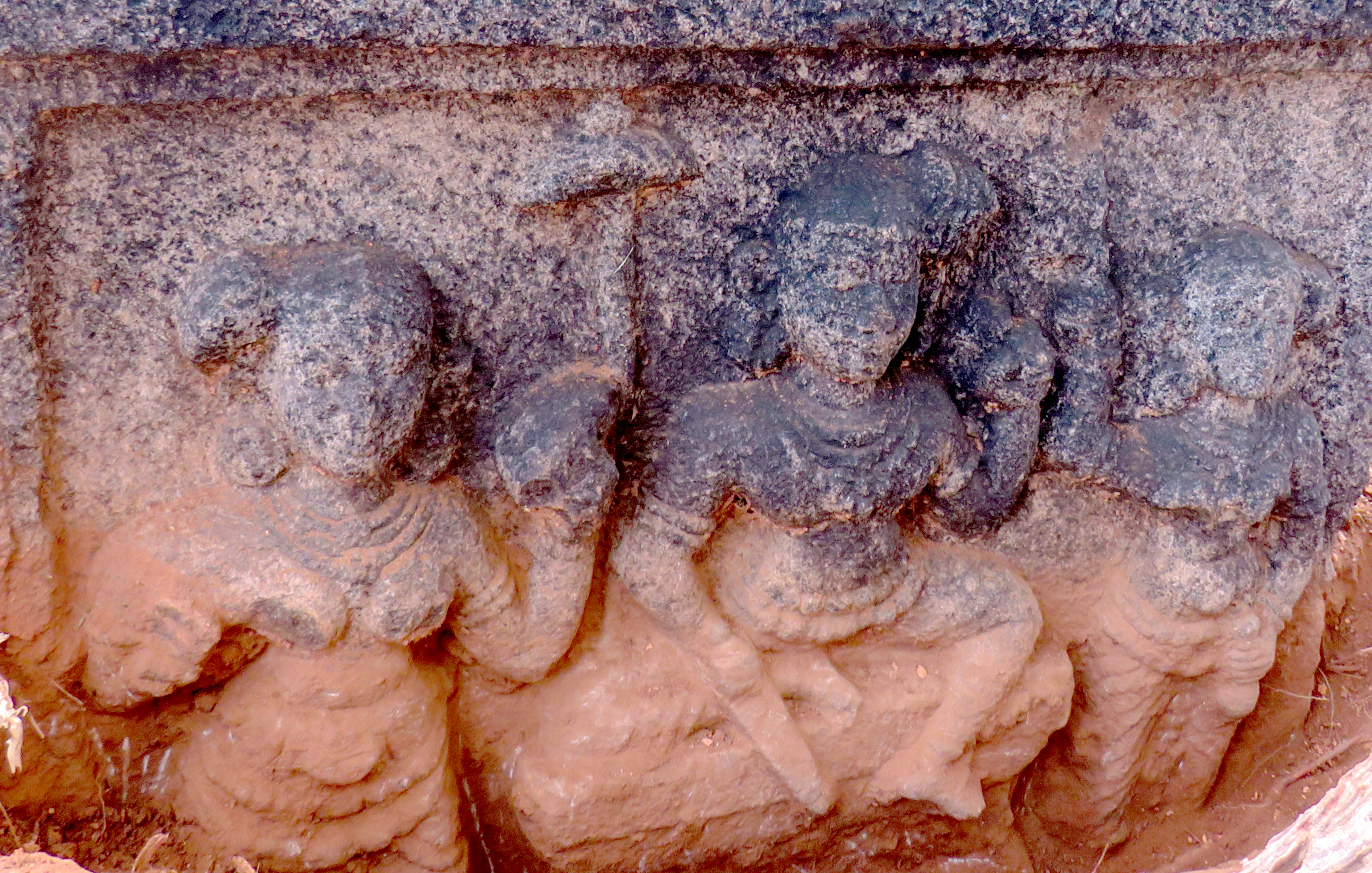
இந்நடுகல்லில் வீரன் ஒருவன் பீடத்தின் மேல், தன் ஒரு காலை மடக்கியும் மறு காலைக் கீழே தொங்கவிட்டபடியும் (சுகாசன அமர்வு) அமர்ந்துள்ளான். வீரனுடைய இரு மனைவியரும் அவனுடைய இருபுறமும் நின்றவாறு புடைப்புச் சிற்பமாகச் செதுக்கப்பட்டுள்ளனர். வீரனுடைய கையில் கட்டாரி எனப்படும் போர் ஆயுதம் காட்டப்பட்டிருக்கிறது. இடப்புறமுள்ள மனைவி வீரனுக்குக் குடைபிடிக்கிறார். வலப்புறமுள்ள மனைவி தன் கையில் விசிறி வைத்துள்ளார். கல்லின் மேற்பகுதி மண்டபத்தின் கூரைபோல் வடிவமைக்கப்பட்டுள்ளது. கூரையில் சூரியன், சந்திரன் ஆகியோரின் வடிவங்கள் செதுக்கப்பட்டுள்ளன. இச்சிற்பத்தின் வடிவமைப்பு, ஆடை, ஆபரணம், அணிகலன்கள் மற்றும் சிற்பக் கலை நுணுக்கங்களை வைத்துப் பார்கும்போது, இது நாயக்கர் காலத்தைச் சேர்ந்த சிற்பமாக இருக்கலாம் என்று கருதப்படுகிறது. மேலும் இச்சிற்பத்தில் காணப்படும் ஆண், ஏதேனும் வீரச்செயல் புரிந்து இறந்திருக்க வேண்டும். அதன் காரணமாக அவனின் இரு மனைவியரும் சதி என்னும் உடன்கட்டை ஏறித் தங்கள் உயிரை மாய்த்திருக்கலாம். இம்மூவரின் நினைவாக இந்த நடுகல் எடுக்கப்பட்டுள்ளது.
Inscription
No
Period / King
The sculpture is believed to be from the 16th - 17th century CE
Additional Information
In this memorial stone, a warrior is depicted seated in a sukhāsana posture (one leg folded and one leg dangling) on a pedestal. His two wives are sculpted standing on either side of him as a bas-relief (a low relief) sculpture. The warrior is shown holding a kattāri/ Katar (a type of weapon). The wife on his left is shown holding an umbrella for him, while the wife on his right holds a fan. The upper part of the stone is designed like the roof of a pavilion, with illustrative carvings of the Sun and the Moon. Based on the sculpture's design, attire, jewelry, ornaments, and artistic details, it is believed that this sculpture may belong to the period of Nayak Rulers. Additionally, it appears that the man may have died after performing some heroic act. As a result, his two wives, in their sorrow, may have committed Sati (self-immolation). This memorial stone has been erected in memory of the three individuals.