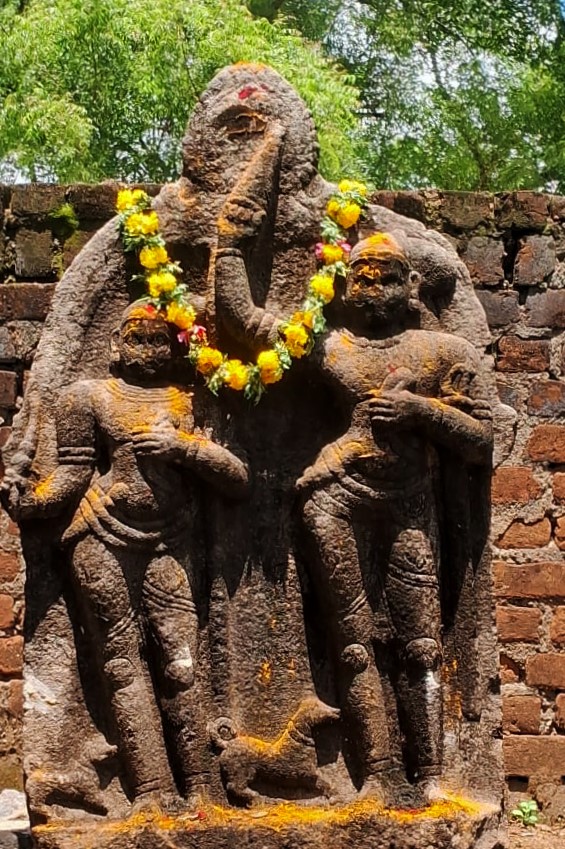
This memorial stone is located to the right side, at the end of the route from Chekkanurani to Kannanur.
worship
6.5 feet in height, 2.8 feet in width.
Village Name
Kannanur
District
Madurai
கதை
உத்தாத்தேவன் என்பவர் வடக்கம்பட்டி கிராமத்தில் வாழ்ந்து, கருமாத்தூர் 18 பட்டி கிராமத்தில் வரிவசூலிக்கும் பெரியவராக இருந்துள்ளார். உத்தாதேவனுக்கு இரண்டு பேரன்கள் - பெரியகழுவன், சின்னகழுவன் - இருந்தனர். பெரியகழுவன் கொக்குளத்தில் திருமணம் செய்து உள்ளான். கண்ணனூரில் நடைபெறவிருந்த திருவிழாவுக்குத் தன் மாமன்களை அழைக்கத் தன் மைத்துனன் மற்றும் வளர்ப்பு நாயோடு கொக்குளம் செல்லும் வழியில் முஸ்ராம் (முஸ்லீம்) படைகளால் தாக்கப்பட்டு மூவரும் இறந்தனர். மூன்று நட்கள் கழித்து முஸ்ராம் படைகள் கண்ணனூரைத் தாக்கின. இப்போரில் சின்னகழுவனும் இறந்தான். இவர்களது பாட்டியின் கனவில் ‘கழுவன் தெய்வம்’ தோன்றி, “தங்கள் இரு பேரன்களும் என்னை அடைந்துவிட்டனர். இனி என்னை வணங்குவதுபோல் இவ்விருவரையும் வணங்கிவர வேண்டும்” என்று கூறி மறைந்ததாக இப்பகுதி மக்களிடையே செவிவழிச் செய்தி உள்ளது.
காலம் / அரசன்
பொது ஆண்டு 13ஆம் நூற்றாண்டு
கூடுதல் விவரங்கள்
இது இரண்டுக்குழுக்களிடையே நடந்த சண்டையில் இறந்து பட்ட சகோதரர்கள் குறித்த நடுகல்லாக இருக்கலாம் என்று இப்பகுதி மக்கள் கருதுகின்றனர். இரண்டு உருவங்கள் செதுக்கப்பட்ட இந்நடுகல்லின் வலப்புறம் உள்ளவர் உயரமாக உள்ளார். இருவரும் இடக்கையில் வளரியைப் பிடித்துக்கொண்டு, அணிகலன்கள் அணிந்தும் கொண்டை கட்டியும் உள்ளனர். உயரமாக உள்ளவர் கட்டாரி போன்ற ஒன்றையும், மற்றவர் குறுவாளையும் வைத்துக்கொண்டு நின்று கொண்டிருக்கின்றனர். இடுப்பில் குறுவாள் வைத்துள்ளனர். கீழே இரண்டு வேட்டை நாய்கள் இருக்கின்றன. கண்ணனூர் மக்கள் பாட்டையா என்ற பெயரில் இந்த நடுகல்லை வழிபட்டு வருகின்றனர்.
தீபம், மாலை, பொங்கல், மொட்டை எனப் பல்வேறு முறைகளில் வழிபாடுகள் நடக்கின்றன. வெளியூரிலிருந்தும் குடிகள் வந்து வழிபட்டுச் செல்கின்றனர். தை மூன்றாம் நாள் ஊருக்குள் இருக்கும் கோடாங்கியை வெறியாட்டம் ஆடவைத்து இந்த ஆட்டத்துடன் பட்டவன் தெய்வத்தை நோக்கி ஆடிச்செல்வார்கள். பின் பட்டவன் கோயிலில் நின்று கோடாங்கி அருள்வாக்கு கொடுக்கிறார். "என் பேரன், பேத்திகளை நான் கட்டிக்காக்கிறேனப்பா" என ஆசிர்வாதம் கொடுத்த பின் பெண்கள் பொங்கல் வைத்து, நடுகல்லுக்கு (கொசவம்) வெள்ளாடை, வெற்றிலை, சாம்பிராணி போன்ற பொருட்களை வைத்துப் பூசை செய்து வழிபடுகின்றனர்.
Story
Uthādhevan lived in Vadakkampatti village and was a tax collector for 18 villages in Karumathur. Uthādhevan had two grandsons – Periyakazhuvan and Chinnakazhuvan. Periyakazhuvan was married to a woman from Kokkulam. On his way to Kokkulam village with his brother-in-law and his pet dog to invite his uncles for a festival in Kannanur, they were attacked by the Muslim army and all three were killed. Three days later, the Muslim army attacked Kannanur. In this battle, Chinnakazhuvan was also killed. According to oral tradition, the grandmother of these two grandsons had a dream in which 'Kazhuvan Deivam' deity appeared and told her, "Both of your grandsons have joined me. From now on, you must worship them just as you worship me." This belief has been passed down among the local people.
Period / King
The sculpture is believed to be from the 13th century CE
Additional Information
The locals believe that this memorial stone might be dedicated to brothers who died in a clan conflict. The hero stone features two carved figures, with the one on the right appearing taller. Both figures are depicted holding a valari (a type of boomarang) in their left hands, adorned with ornaments, and wearing traditional bun hairdo. The taller figure holds a Kattāri/Katar (dagger-like weapon), while the other holds a short sword. They both have a dagger tucked at their waists. Below them, two hunting dogs are carved.
The people of Kannanur worship this hero stone by the name 'Pāttaiyā'. Various rituals, such as lighting lamps, offering garlands, preparing Pongal (a dish made of cooked rice) and even ritual tonsuring/ head shaving (Mottai), are performed as acts of devotion. Devotees from distant places also come to worship here. The local people celebrate this deity on the third day of the tamil month of Thai. During this festival, a ritualistic trance dance is performed (veriyāttam of Kōdāngi). The dancer(s), possessed by divine energy, dances toward the Pattavan Deivam temple accompanied by the locals. After reaching the Pattavan temple, the Kōdāngi delivers divination (Arul Vāku), blessing the devotees by saying, "I will protect my grandchildren." Following this, women cook Pongal and offer white garment (Kosavam), betel leaves, incense, and other sacred items to the hero stone as part of the worship.