
It is located outside of the temple situated in the forested area of Pichampatti village near Thummakundu.
worship
3.7 feet in height, 2.7 feet in width.
Village Name
Pichampatti
District
Madurai
கதை
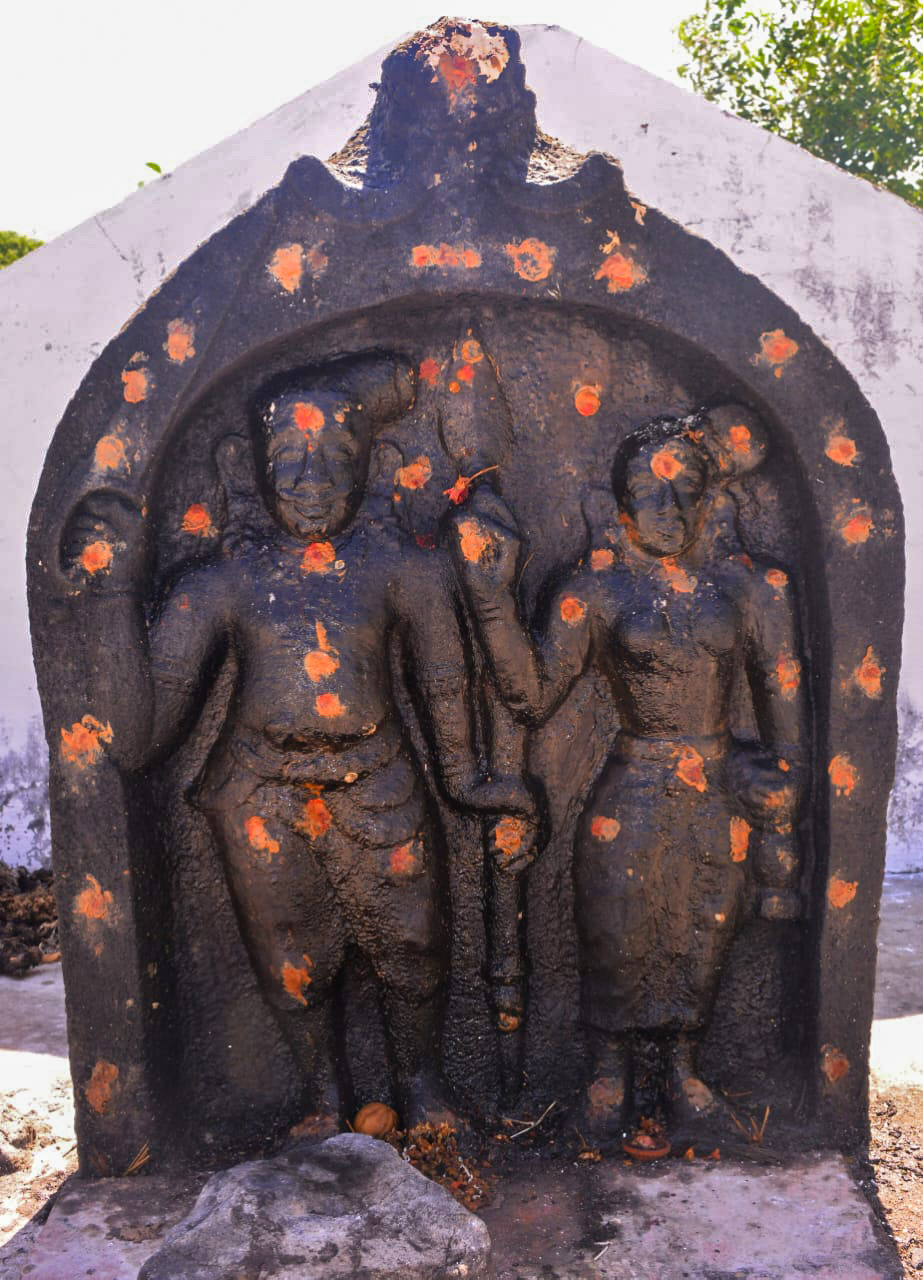
படைவெட்டுக் காலத்தில், (மாலிக்கபூர் காலத்திலிருந்து, ஆங்கிலேயர்கள் மதுரையைத் தங்கள் கட்டுப்பாட்டில் கொண்டுவந்த காலம் வரை நடைபெற்ற பல போர்களை இப்பகுதி மக்கள் படைவெட்டுக் காலம் என்கின்றனர்) முஸ்லிம் படை முன்னேறிச் சென்றபோது எதிர்த்து நின்று போர் புரிந்த சின்னாங்கி என்பவர் முதுகில் குத்துப் பெற்று இறந்ததைக் கேட்ட அவர் மனைவி தன் நாக்கைப் பிடுங்கி இறந்ததாகச் சொல்லப்படுகிறது. எனவே, அவர்களின் உறவினர்களும் ஊர்மக்களும் இவ்விருவருக்கும் நடுகல் வைத்தனர்.
கல்வெட்டுகள்
இல்லை
காலம் / அரசன்
பொது ஆண்டு 13ஆம் நூற்றாண்டு
கூடுதல் விவரங்கள்
கணவன் மனைவி ஆகிய இருவரின் உருவமும் இந்நடுகல்லில் காட்சிப்படுத்தப்பட்டுள்ளன. கணவன் வலக்கையில் வாளை உயர்த்திப் பிடித்தவாறு, இடக்கையில் வேல் வைத்துள்ளான். மனைவி தன் இடக்கையில் ஒரு குடத்தை ஏந்தியுள்ளாள். இருவருக்கும் நீண்ட காதுகளும் தலையில் கொண்டையும் உள்ளன. மாசிப்பச்சைத் திருவிழா (குலதெய்வ வழிபாட்டு நாள்) அன்று புத்தாடை உடுத்து, தேங்காய் பழம் வைத்து இந்நடுகல்லை மக்கள் வழிபடுகின்றனர்.
Story
During the 'Padaivettu' period (a term used by the local people to refer to the numerous wars fought from the time of Malik Kafur to the period when the British took control of Madurai), a Muslim army advanced through the region. Chinnāngi, who stood in resistance and fought against them, was fatally stabbed in the back. Upon hearing of his death, his wife bit off her own tongue and died. Their relatives and the villagers erected hero stones in memory of both of them.
Inscription
No
Period / King
The sculpture is believed to be from the 13th century CE
Additional Information
The images of both the husband and wife are depicted on this hero stone. The husband is shown holding a sword raised in his right hand and a spear in his left hand. The wife is depicted holding a small pot in her left hand. Both figures have long ears and a bun hairdo. On the occasion of the Masipachai festival (a day of ancestral deity worship), the people wear new clothes, offer coconuts and fruits, and worship the hero stone.