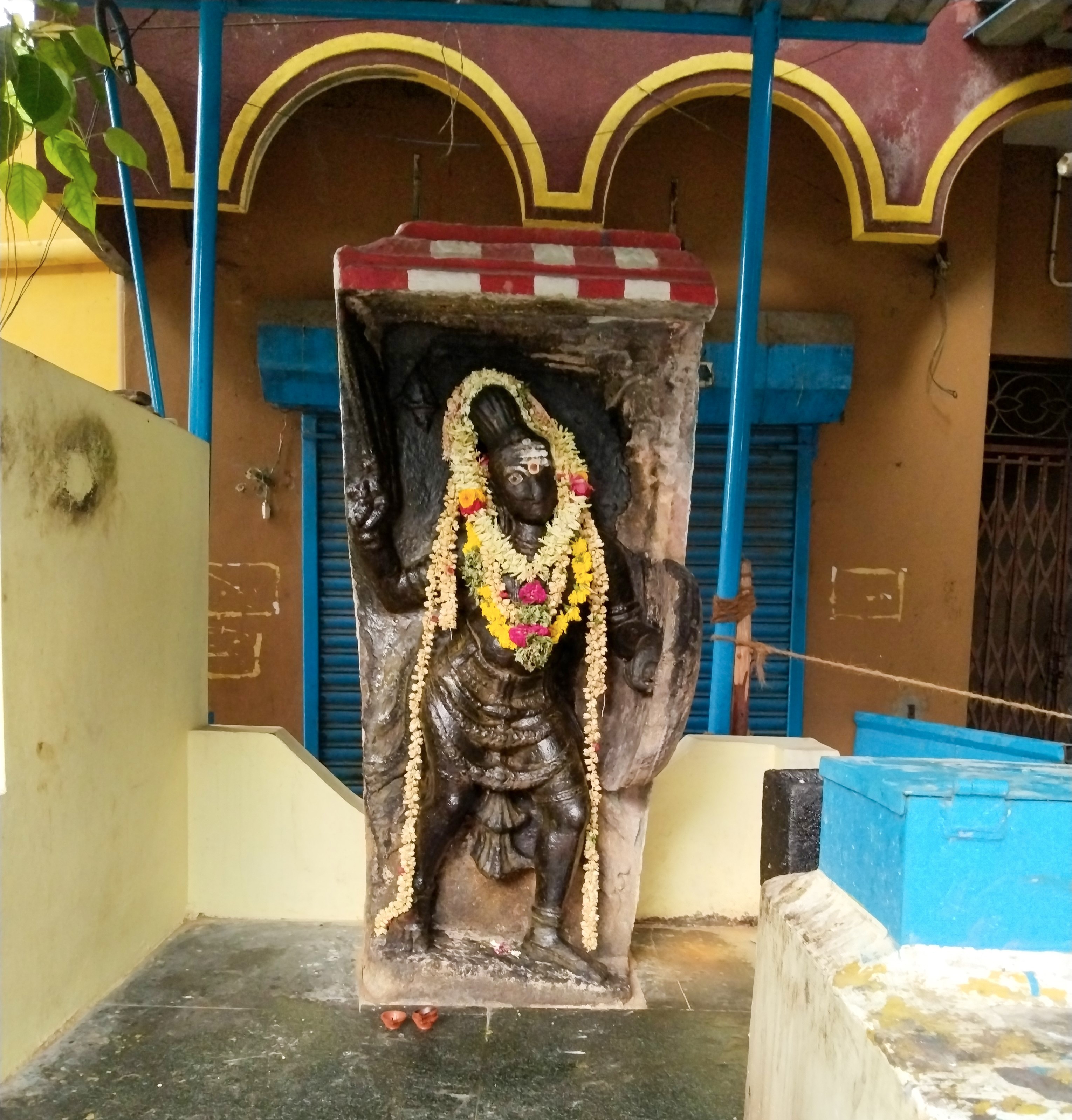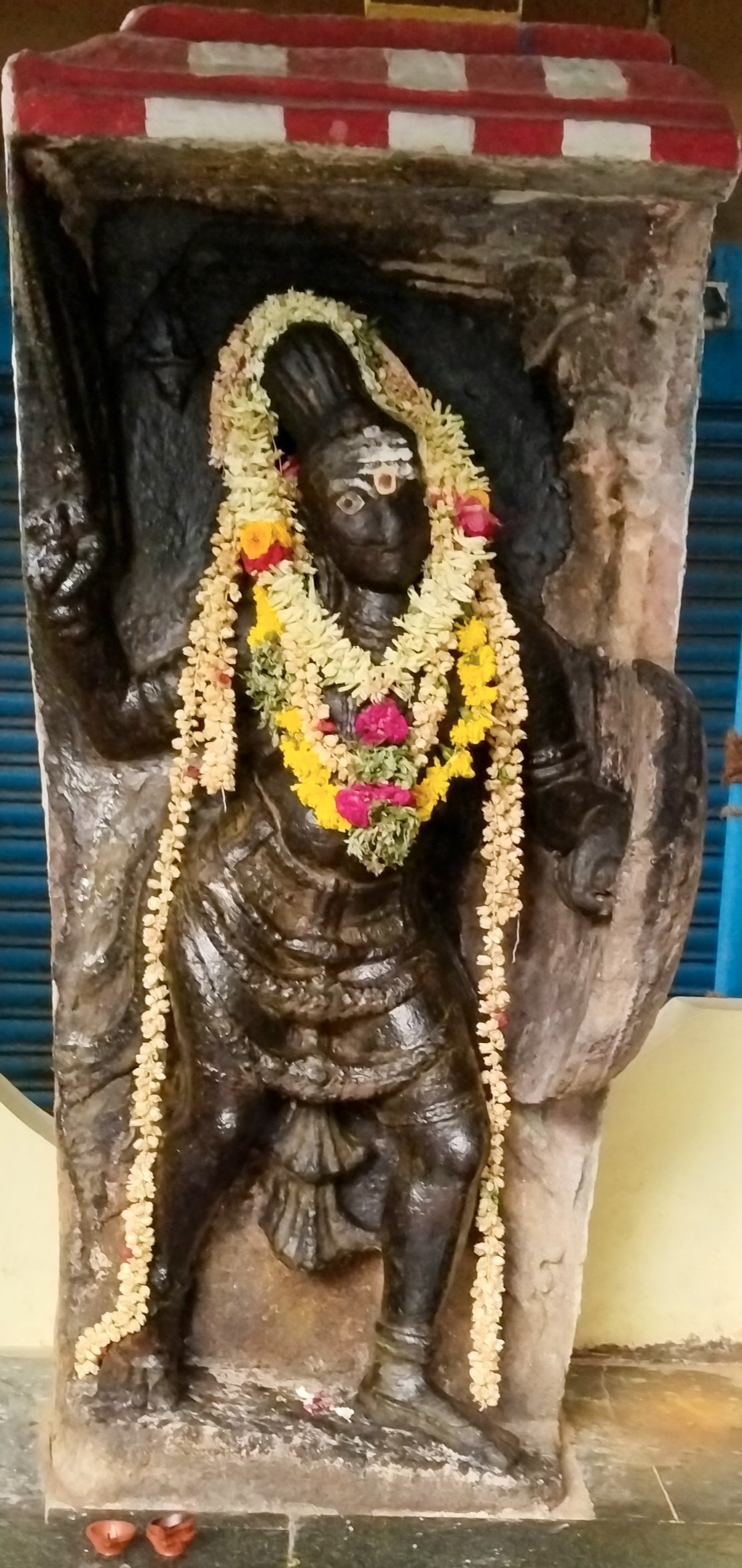
இப்பகுதியில் வீரன் ஒருவன் குதிரைச் சவாரி செய்து வரும்போது இந்த இடத்தில் வந்தவுடன் குடல் சரிந்து இறந்து விட்டதாக ஊர்மக்கள் கூறுகின்றனர். அந்த வீரன் அப்படியே இங்குக் கல்லாக மாறிவிட்டதாகவும் நம்புகின்றனர். எனவே உடல் உபாதைகள் ஏதேனும் இருப்பின் இங்கு வந்து வழிபட்ட பிறகு நலம் பெறுவதாக நம்புகின்றனர்.
கல்வெட்டுகள்
இல்லை
காலம் / அரசன்
பொது ஆண்டு 17ஆம் நூற்றாண்டு
கூடுதல் விவரங்கள்
இந்த நடுகல் சிற்பத்தில் காணப்படும் வீரன் தன் வலக்கையில் சிறிய நீள்முனைத் துப்பாக்கியையும் இடக்கையில் கேடயத்தையும் ஏந்தியவாறு புடைப்புச் சிற்பமாகச் செதுக்கப்பட்டுள்ளான். காதணிகள், கடக வளை, தண்டை மற்றும் முழங்கால் அளவு ஆடையும் அணிந்துள்ளான். இந்நடுகல்லைச் சுற்றி இப்போது கோவில் போன்று அமைப்பு செய்யப்பட்டுள்ளது. இங்குச் சனிக்கிழமைகள் மற்றும் மாதத்தில் ஒரு நாள் படையல் வைத்து வழிபாடு செய்கின்றனர்.
Story
According to local tradition, a warrior experienced intestinal collapse while riding a horse and died upon reaching this spot. It is believed that the warrior turned into stone right here. Therefore, people believe that if they are suffering from any bodily ailments, they will be cured after coming here and offering worship.
Inscription
No
Period / King
The sculpture is believed to be from the 17th Century CE
Additional Information
In this bas-relief sculpture, the warrior is depicted holding a gun, which looks like a long-barreled flintlock, in his right hand and a shield in his left hand, carved in a posture as if he is ready for battle. He is adorned with ear ornaments, armlets, anklet, and knee-length attire. An enclosure has been constructed around the hero stone, to serve as a temple/place of worship. Here, devotees offer Padaiyal (ritual food offerings) and perform worship on Saturdays and on a designated day each month.