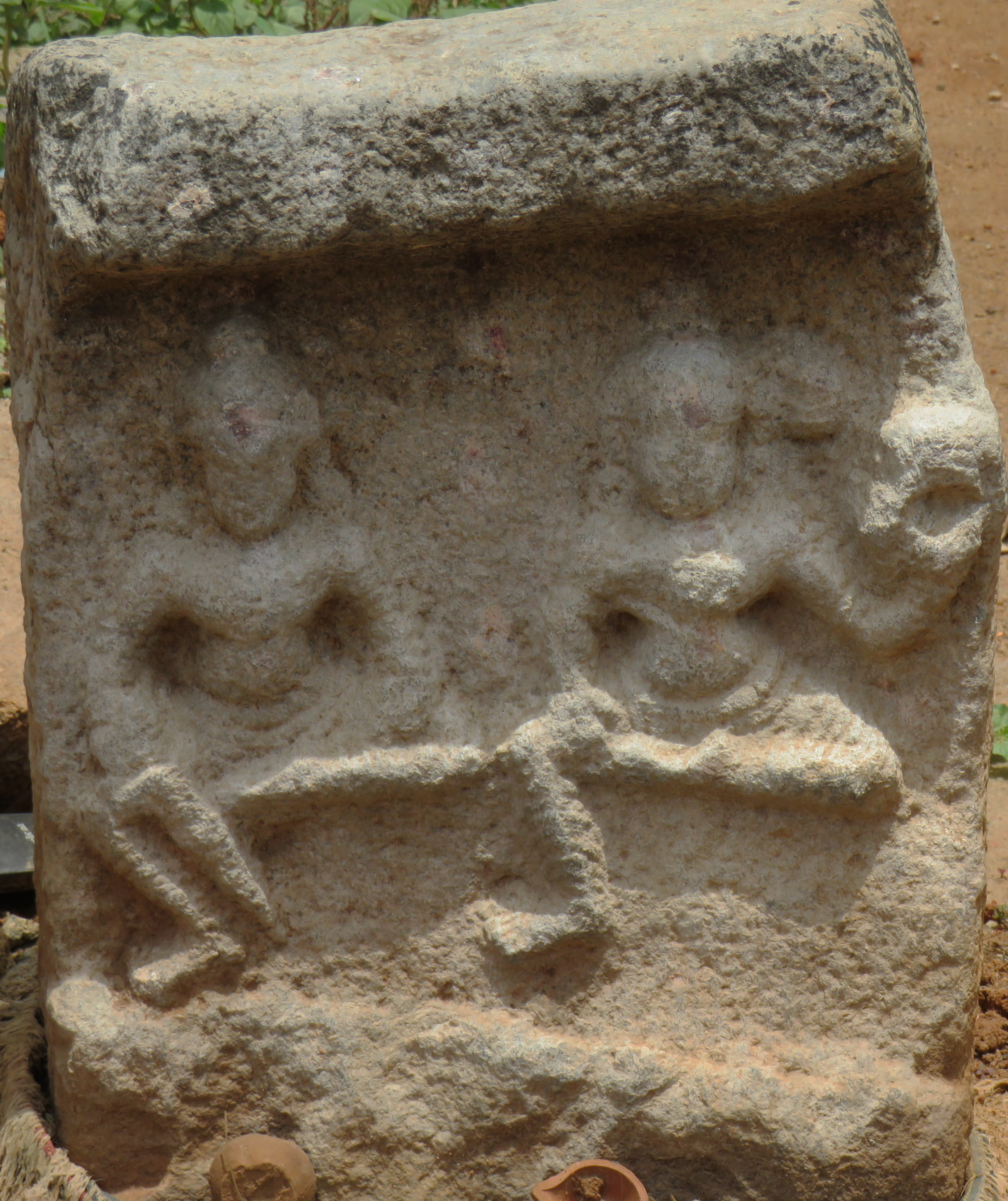
இச்சதிக்கல்லில் ஆண் ஒருவன் தனது மனைவியுடன் பீடம் ஒன்றில் சுகாசன அமர்வில் அமர்ந்துள்ள காட்சி புடைப்புச் சிற்பமாக வெட்டப்பட்டுள்ளது. அவனது வலது கையில் வாள் காட்டப்பட்டிருக்கிறது. தலை அலங்காரமாக கொண்ட காணப்படுகிறது. இச்சிற்பத்தில் காணப்படும் ஆண் ஏதோ ஒரு நிகழ்வில் இறந்திருக்க வாய்ப்புள்ளது. இதன் காரணமாக அவனுடைய மனைவியும் சதி என்னும் உடன்கட்டை ஏறி இறந்திருக்க வாய்ப்புள்ளது. இந்நிகழ்வை அடையாளப்படுத்தும் விதமாக இந்த சதிக்கல் எடுக்கப்பட்டுள்ளது. பெண்ணின் வலது கையில் வட்டமான கண்ணாடி போன்ற ஒரு பொருள் காணப்படுகிறது. பொதுவாக இப்பகுதியைச் சேர்ந்த சதி சிற்பங்களில் கண்ணாடி காட்டப்படுவது வழக்கமாகும். இச்சிற்ப வடிவமைப்பின் அடிப்படையிலும், ஆடை, அலங்காரம் மற்றும் அணிகலன்களின் அடிப்படையிலும், இது பொது ஆண்டு 17 -18 ஆம் நூற்றாண்டைச் சேர்ந்த நடுகல்லாக இருக்கலாம் என்று கருதப்படுகிறது.
Period / King
Common Era 17th–18th century
Additional Information
On this memorial stone, a scene is carved in relief showing a man seated in a Sukhasana posture on a pedestal with his wife. A sword is shown in his right hand, and he is depicted wearing a head ornament. The man may have died in a heroic event. Following this, his wife may have performed sati and died with him. This memorial stone was erected to commemorate that event. In the woman’s right hand, an object resembling a round mirror is shown. Generally, in such memorial sculptures from this region, the depiction of a mirror is common. Based on this sculptural design, as well as the dress, ornaments, and accessories, this hero stone is considered to belong to the 17th–18th century CE.