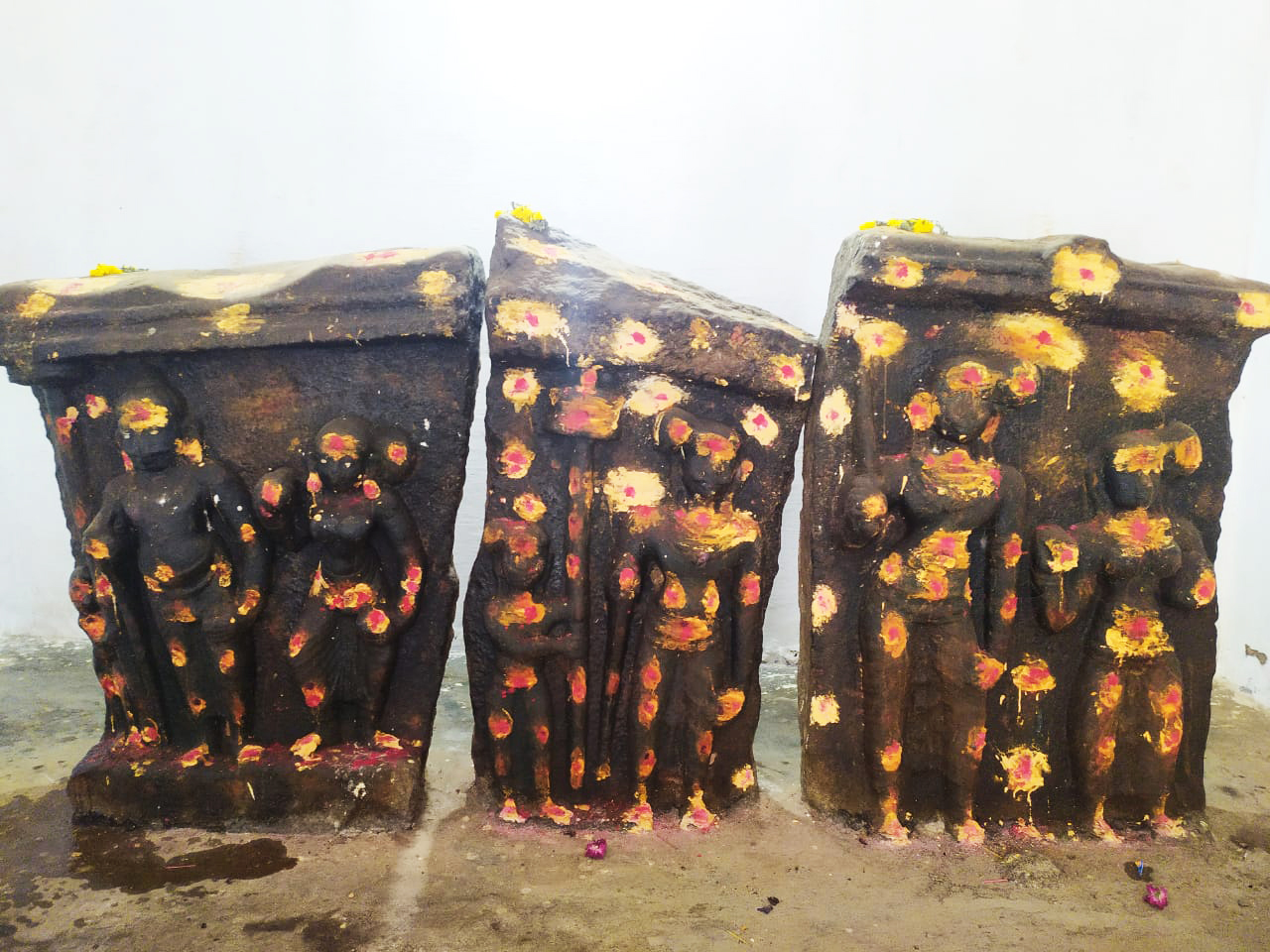
It is located on Jakkammal Temple Street in Chinnamanur.
worship
Approximately 3 feet tall, 2.5 feet wide
Village Name
Chinnamanur
District
Theni
காலம் / அரசன்
பொது ஆண்டு 17 -18 ஆம் நூற்றாண்டாக இருக்கலாம்.
கூடுதல் விவரங்கள்
ஒரே இடத்தில் மூன்று நடுகற்கள் வைக்கப்பட்டு வழிபடப்படுகின்றன.
1. இடபுறமுள்ள முதல் நடுகல்லில், வீரன் ஒருவன் (சமபங்க நிலையில்) நின்றவாறு புடைப்புச் சிற்பமாக செதுக்கப்பட்டுள்ளான். வீரன் முறுக்கிய மீசை, கையணிகள் மற்றும் கழுத்தணிகளை அணிந்தவாறும், வலது கையில் வாளை பிடித்துக்கொண்டு, இடது கையை இடது தொடையில் வைத்தவாறும் கம்பீரமாக காட்சிப்படுத்தப்பட்டுள்ளான். இவ்வீரனின் இடப்பக்கம் அவன் மனைவி நின்றவாறு காட்சிப்படுத்தப்பட்டிருக்கிறார். வீரனின் வலது பக்கம் குடை பிடித்தபடி நிற்கும் ஒரு சிறிய நபர் காட்டப்பட்டுள்ளார்.
2. நடுவில் உள்ள கல்லில் காணப்படும் வீரன், தன் வலக்கையில் வாள் ஏந்தியுள்ளான். இவ்வீரனுக்கு சேவகன் ஒருவன் குடை பிடித்தபடி நின்றவாறு காட்சிப்படுத்தப் பட்டிருப்பதால் இவ்வீரன் இப்பகுதியில் வாழ்ந்து மறைந்த ஒரு தலைவன் அல்லது குறுநில மன்னனாக இருக்கலாம் என கருத வாய்ப்புள்ளது.
3. வலப்பக்கம் உள்ள நடுகலில் காணப்படும் வீரன், தன் வலக்கையில் வாளை உயர்த்தி பிடித்தபடியும் இடது கையை இடது தொடையில் வைத்தபடியும் உள்ளான். இவ்வீரனின் இடப்பக்கம் அவன் மனைவி நின்றவாறு காட்சிப்படுத்தப்பட்டிருக்கிறார்.
இந்நடுகற்க்களில் காணப்படும் அனைவருக்கும் நீள் காதுகள், கொண்டை மற்றும் ஆபரணங்கள் காட்டப்பட்டுள்ளன. இவை வீர மரணம் அடைந்த வீரர்களின் நினைவாகவும், அதன் காரணமாக அவ்வீரர்களின் மனைவியர்கள் மேற்கொண்ட சதி என்னும் உடன்கட்டை ஏறிய நிகழ்வின் நினைவாகவும் எடுக்கப்பட்ட நடுகற்களாக இருக்கலாம். இம்மூன்று நடுக்கற்களும் வெவ்வேறு இடங்களில் இருந்து எடுத்துவரப்பட்டு இங்கு ஒன்றாக வைக்கப்பட்டிருக்கலாம்.
Period / King
It may be from the 17th–18th century Common Era
Additional Information
Three hero stones are placed and worshipped at the same location.
On the left-side hero stone, a warrior is carved in relief, standing in a samabanga posture. The warrior is depicted with a twisted moustache, armlets, and necklaces, holding a sword in his right hand and resting his left hand on his left thigh. His wife is shown standing on his left side, and a small person holding an umbrella is depicted on the warrior’s right side.
The hero in the middle stone is shown holding a sword in his right hand. A servant holding an umbrella is shown standing beside him, which suggests that this warrior may have been a local chieftain or minor ruler who lived and died in this region.
On the right-side hero stone, the warrior holds a sword raised in his right hand and rests his left hand on his left thigh. His wife is depicted standing on his left side.
All the male and female figures on these hero stones are shown with long ears, hair knot, and ornaments. These stones may have been erected in memory of warriors who died heroic deaths and in remembrance of their wives who committed sati. The three hero stones may have been brought from different locations and placed together here.