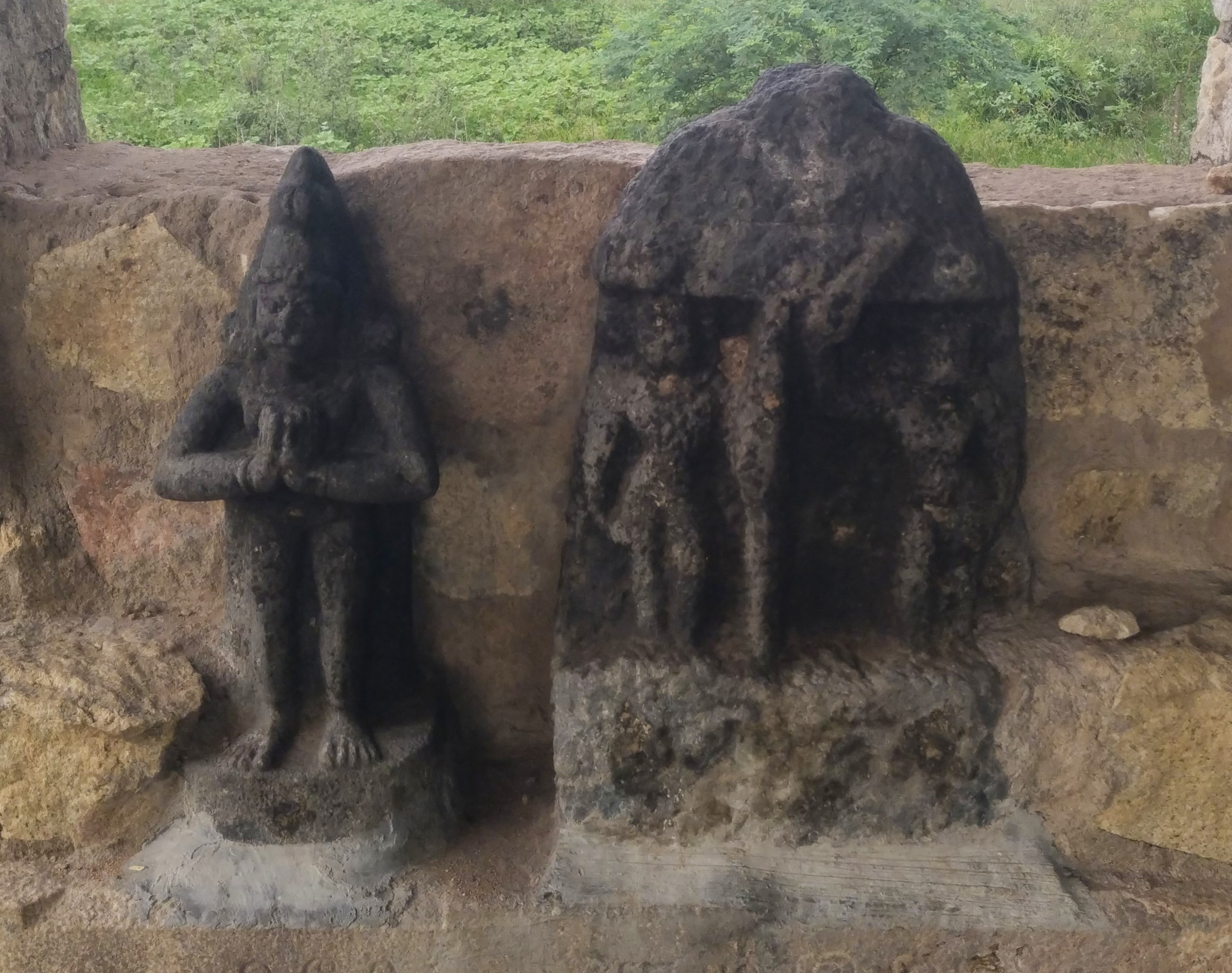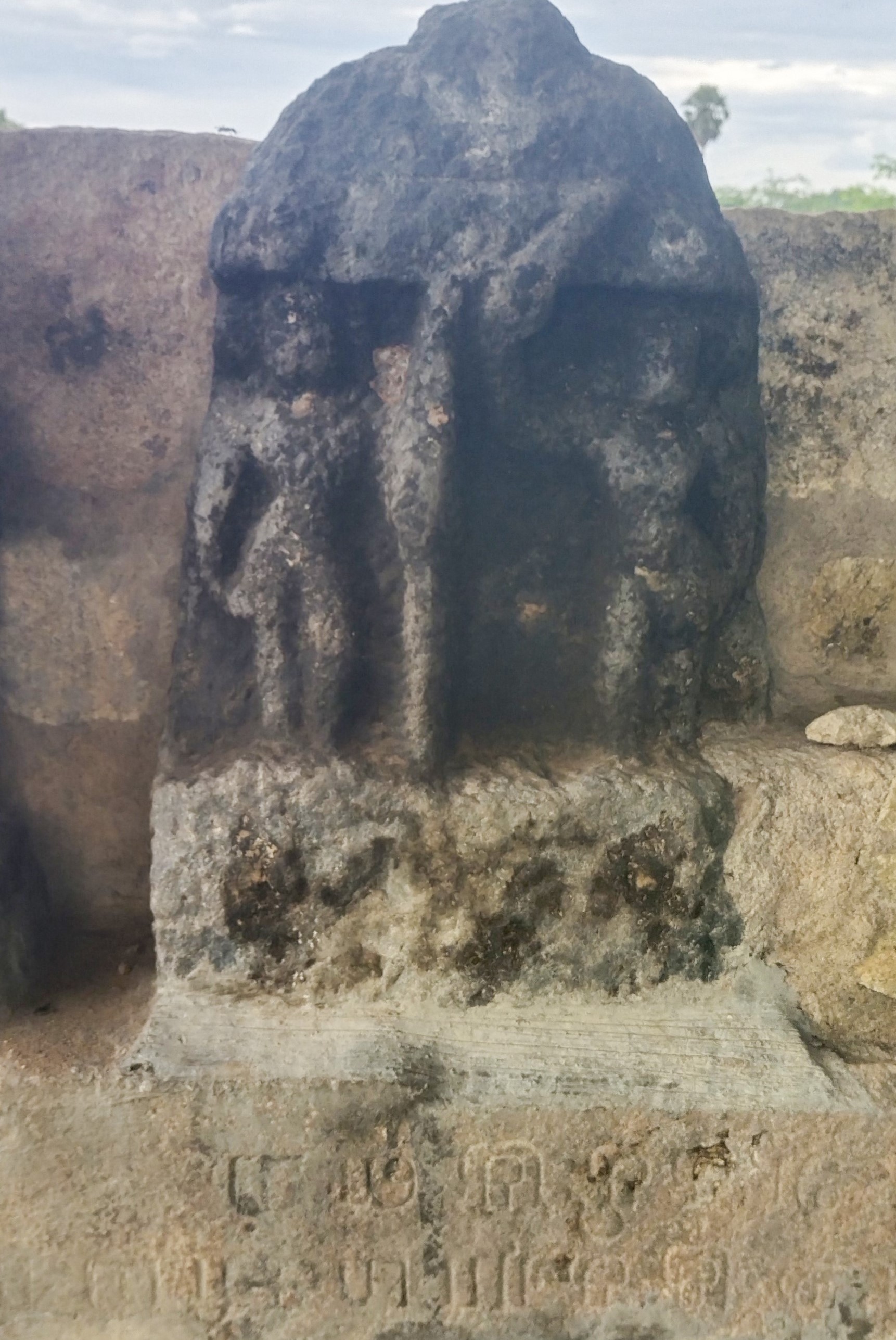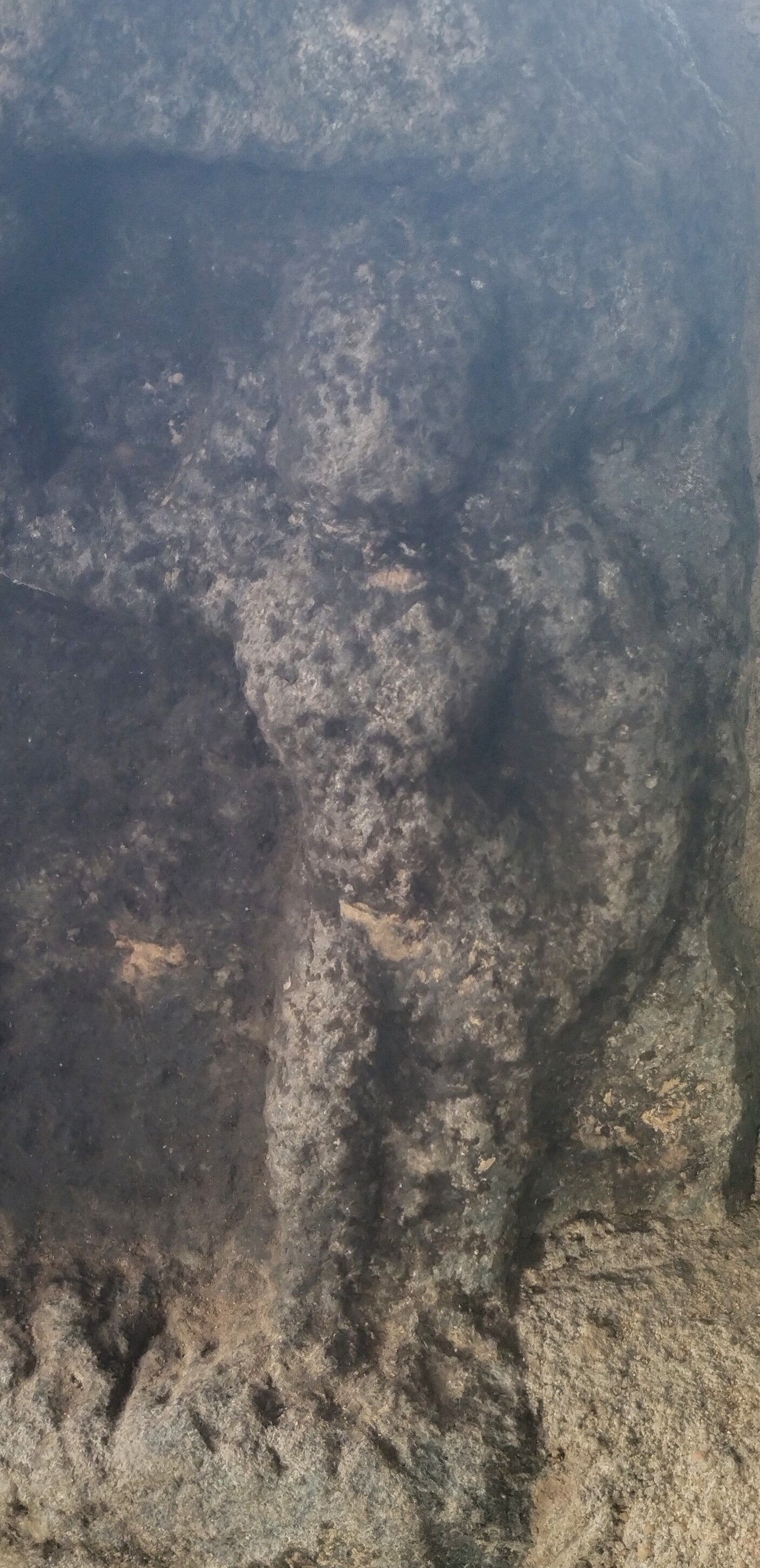
இவ்விரு சிற்பங்களின் கீழ்ப்பகுதியில் ஒரு தமிழ்க் கல்வெட்டு காணப்படுகிறது. இது தலைகீழாக வெட்டப்பட்டுள்ளது. எழுத்துகளை முழுமையாக படிக்க முடியவில்லை. எனினும், ‘…..அ(த்)திகுளம் 1950..’ என்ற எழுத்துக்கள் காணப்படுகின்றன.
கல்வெட்டின் மொழி / எழுத்து
தமிழ்
காலம் / அரசன்
பொது ஆண்டு 18ம் நூற்றாண்டு
கூடுதல் விவரங்கள்
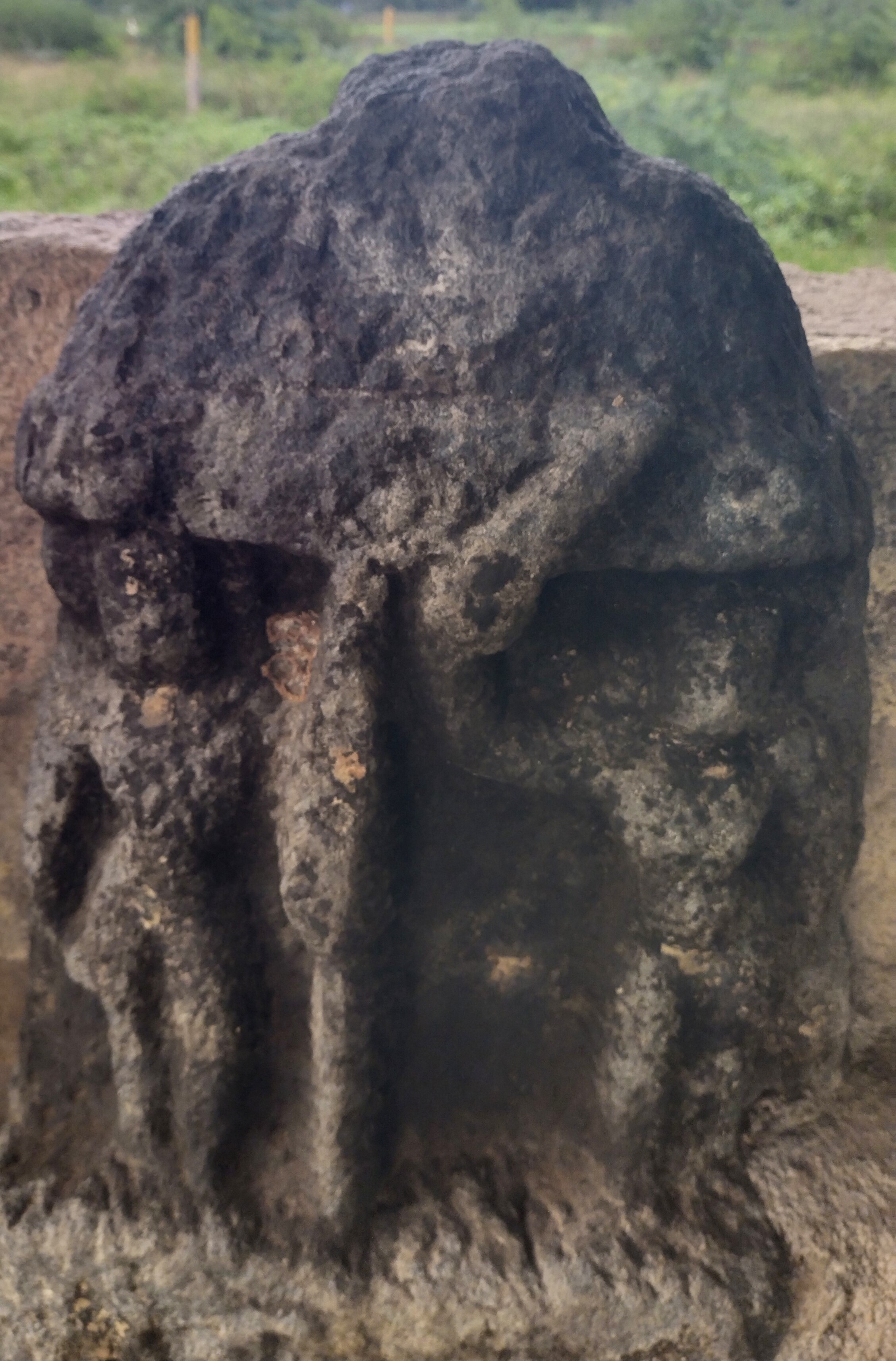
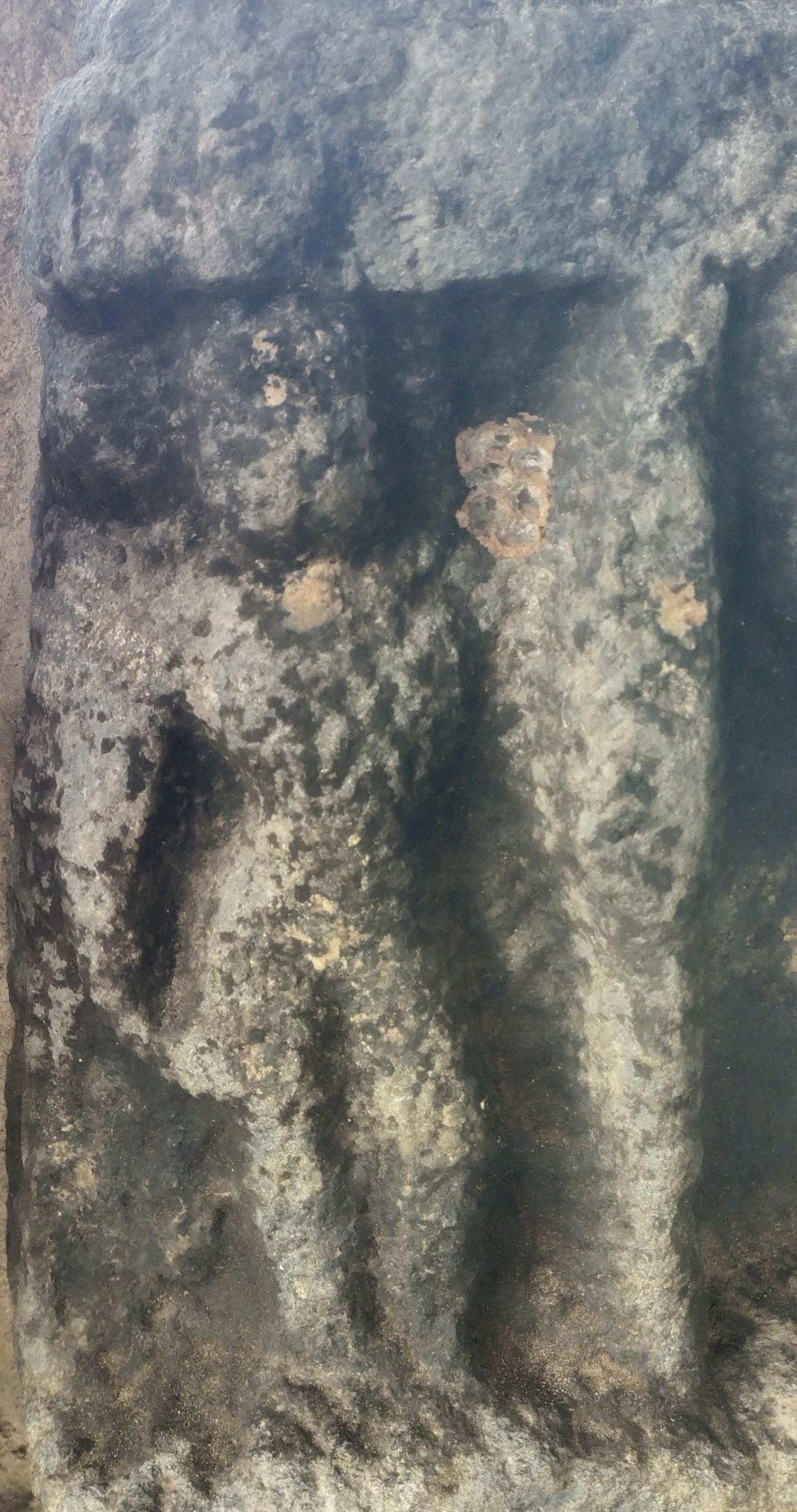
இவ்விடத்தில் இரு சிற்பங்கள் காணப்படுகின்றன. இடப்பக்கமுள்ள சிற்பம் தலையில் கிரீடத்துடன் கைக்கூப்பிய ஒர் அரசன் போல உள்ளது. வலப்பக்கமுள்ள சிற்பம் தேய்ந்த நிலையிலுள்ள ஒரு நடுகல்லாகும். நடுகல்லில் காணப்படும் இரு நபர்களும் போர் வீரர்களாக இருந்திருக்க வாய்ப்புள்ளது. ஏனெனில், வலதுபக்கமுள்ள வீரன் தன் வலக்கையில் வாளை உயர்த்திப் பிடித்தபடியும் மற்றொரு கையை நளினமாக இடையில் வைத்தபடியும் நின்றுள்ளான். இடப்பக்கமுள்ள வீரன் தனது இடக்கையில் ஈட்டியைப் பிடித்தபடியும் மற்றொரு கையை இடையில் வைத்தபடியும் செதுக்கப்பட்டுள்ளான். பொது ஆண்டு 18 ஆம் நூற்றாண்டைச் சேர்ந்ததாகக் கருதப்படும் இந்நடுகல், போர் வீரர்களாக விளங்கிய இவ்விருவரின் வீரத்தைப் போற்றும் வகையில் எடுக்கப்பட்டுள்ளது. தற்போதும் இந்நடுகல்லை இப்பகுதி மக்கள் வழிபட்டு வருகின்றனர்.
Inscription
A Tamil inscription is found at the bottom of both sculptures. It is inscribed upside down. The writings cannot be read completely. However, the writings ‘…..A(th)thikulam 1950..’ are found.
Script & Language of Inscription
Tamil
Period / King
18th century CE
Additional Information
There are two sculptures at this site. The sculpture on the left resembles a king with a crown on his head and hands clasped. The sculpture on the right is a worn-out hero-stone. The two figures in the hero stone are likely to have been warriors. Because the warrior on the right is standing with his sword raised in his right hand and his other hand delicately placed on his hip. The warrior on the left is carved with his left hand holding a spear and his other hand is placed on the hip. This hero-stone, which is believed to date back to the 18th century, was taken to honor the bravery of these two warriors. Even today, this hero-stone is worshipped by the people of this area.