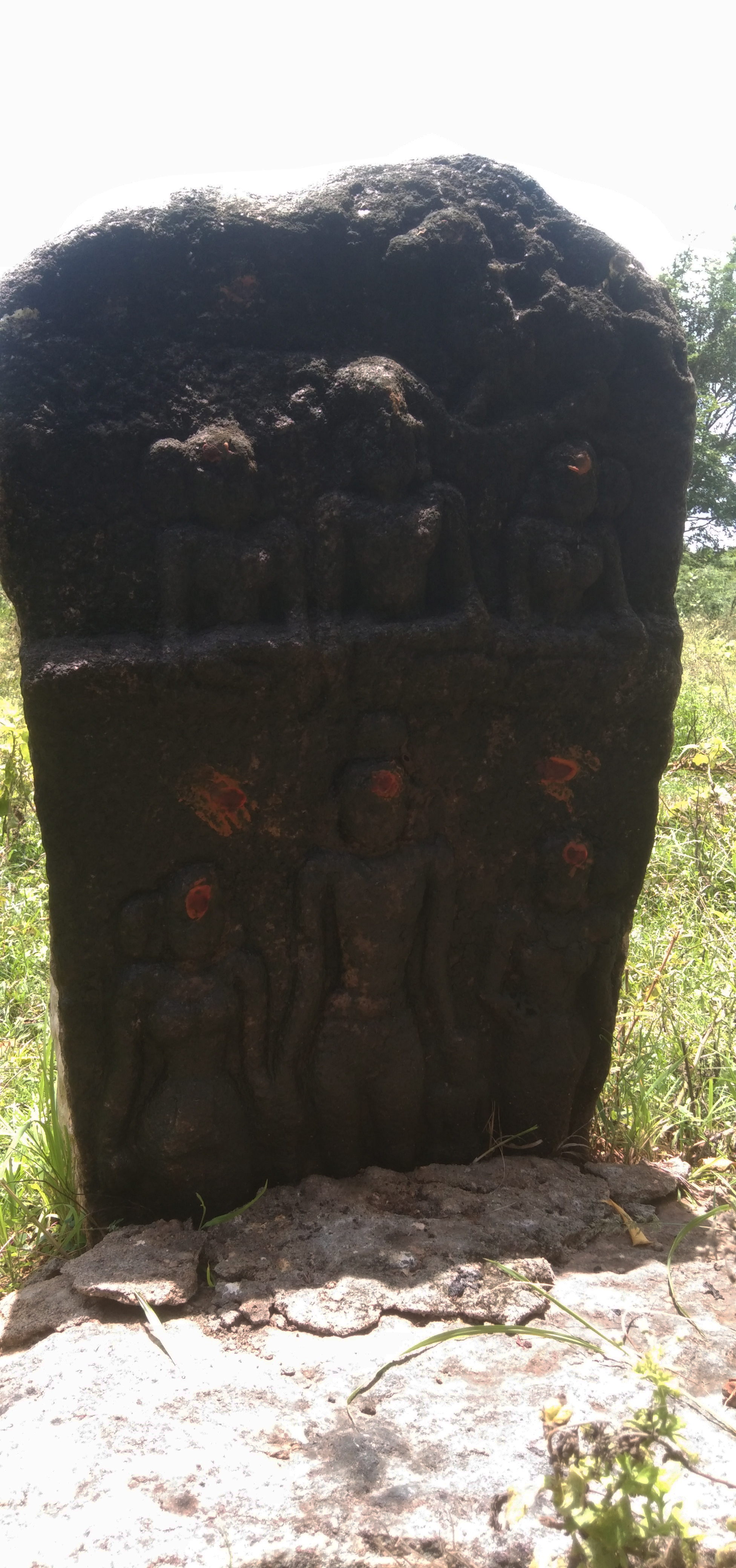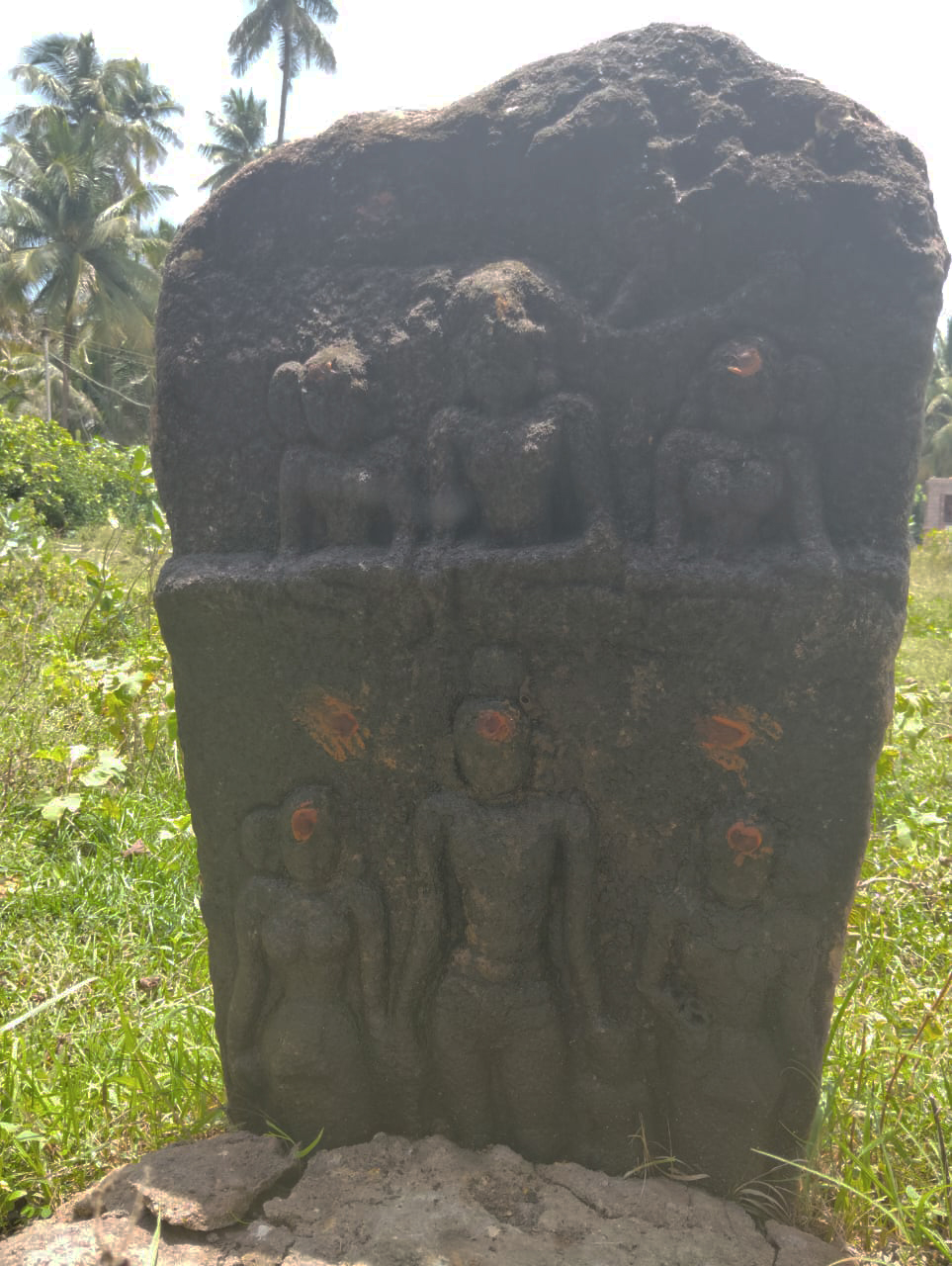
It is located on the banks of the Vaigai River, between Kannudaiyar Puram and Guru Bhagavan Temple.
Period / King
Historical period
Village Name
Kuruvithurai
District
Madurai
கூடுதல் விவரங்கள்
அகலமான கல்லில் செதுக்கப்பட்டுள்ள இந்த நடுகல் இரண்டு அடுக்குகளாக பிரிக்கப்பட்டு புடைப்புச் சிற்பங்கள் வடிக்கப்பட்டுள்ளன. கீழடுக்கில் இரண்டு பெண்களுக்கு நடுவில் ஓர் ஆண் நின்றபடி காட்சிப்படுத்தப்பட்டுள்ளான். இவ்விரு பெண்கள் நடுக்கல்லில் காணப்படும் ஆணின் மனைவியராக இருக்க வாய்ப்புள்ளது. இம்மூவரும் தலையில் கொண்டை அணிந்துள்ளனர். நடுவில் உள்ள ஆணின் இடதுகை பக்கம், ஒரு குழந்தை நிற்பது போல் தெரிகிறது. இச்சிறுவனுக்கு அருகில் நிற்கும் பெண் தன் கையில் ஏதோ ஒரு பொருளை ஏந்தி உள்ளார். நடுகல்லின் மேலடுக்கில் ஓர் ஆண் மற்றும் இரண்டு பெண்கள் சுகாசனம் அமர்வில் (ஒரு காலை மடக்கி மற்றொரு காலை தொங்கவிட்டபடி) அமர்ந்துள்ளனர்.
சிற்பத்தின் கீழ் அடுக்கில் காணப்படும் இவர்கள் ஏதேனும் வீர செயல்புரிந்து இறந்திருக்க வேண்டும். எனவே, அவர்களின் நினைவாக இந்நடுகல் எழுப்பப்படடிருக்க வேண்டும் என கருதப்படுகிறது. மேலும், இவர்கள் பூலோகத்தை விட்டு மேல் லோகம் சென்று விட்டதைக் காட்டும் விதமாக நடுக்கல்லின் மேல் அடுக்கில், அமர்ந்த நிலையில் இவர்கள் வடிவமைக்கப்பட்டிருக்கலாம் எனவும் கருதப்படுகிறது. சிற்ப அமைதியின் அடிப்படையில், இது பொது ஆண்டு 17 ஆம் நூற்றாண்டை சேர்ந்த சதிக்கல்லாக/ நினைவுக்கல்லாக இருக்கலாம் என கருதப்படுகிறது. தற்போது ஊர் மக்கள் இதை தெய்வமாக வழிபட்டு வருகின்றனர்.
Additional Information
This hero stone, carved on a broad slab, is divided into two tiers with relief sculptures. In the lower tier, a man is depicted standing between two women, who are likely to be his wives. All three figures are shown with their hair tied in a topknot. To the left of the central male figure stands a child, and beside the child, one of the women is seen holding an object in her hand. In the upper tier, one man and two women are shown seated in a relaxed posture, with one leg folded and the other hanging down.
The figures in the lower tier may have died while performing an act of bravery, and this hero stone might have been erected in their memory. The seated figures in the upper tier could represent their ascent to the heavenly realm after leaving the earthly world. Based on stylistic features, this memorial or sati stone is believed to belong to the 17th century CE. The villagers currently worship it as a deity.