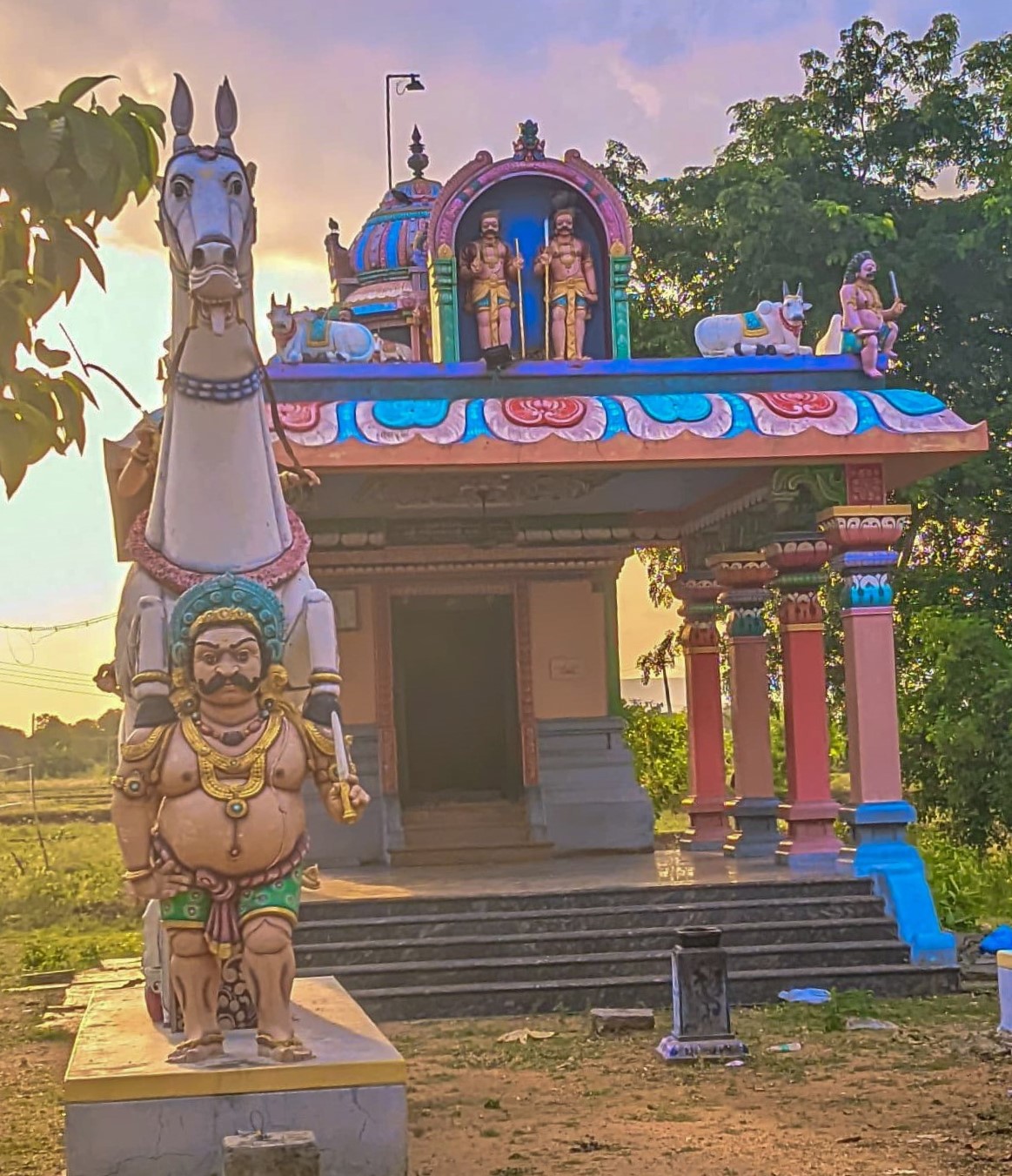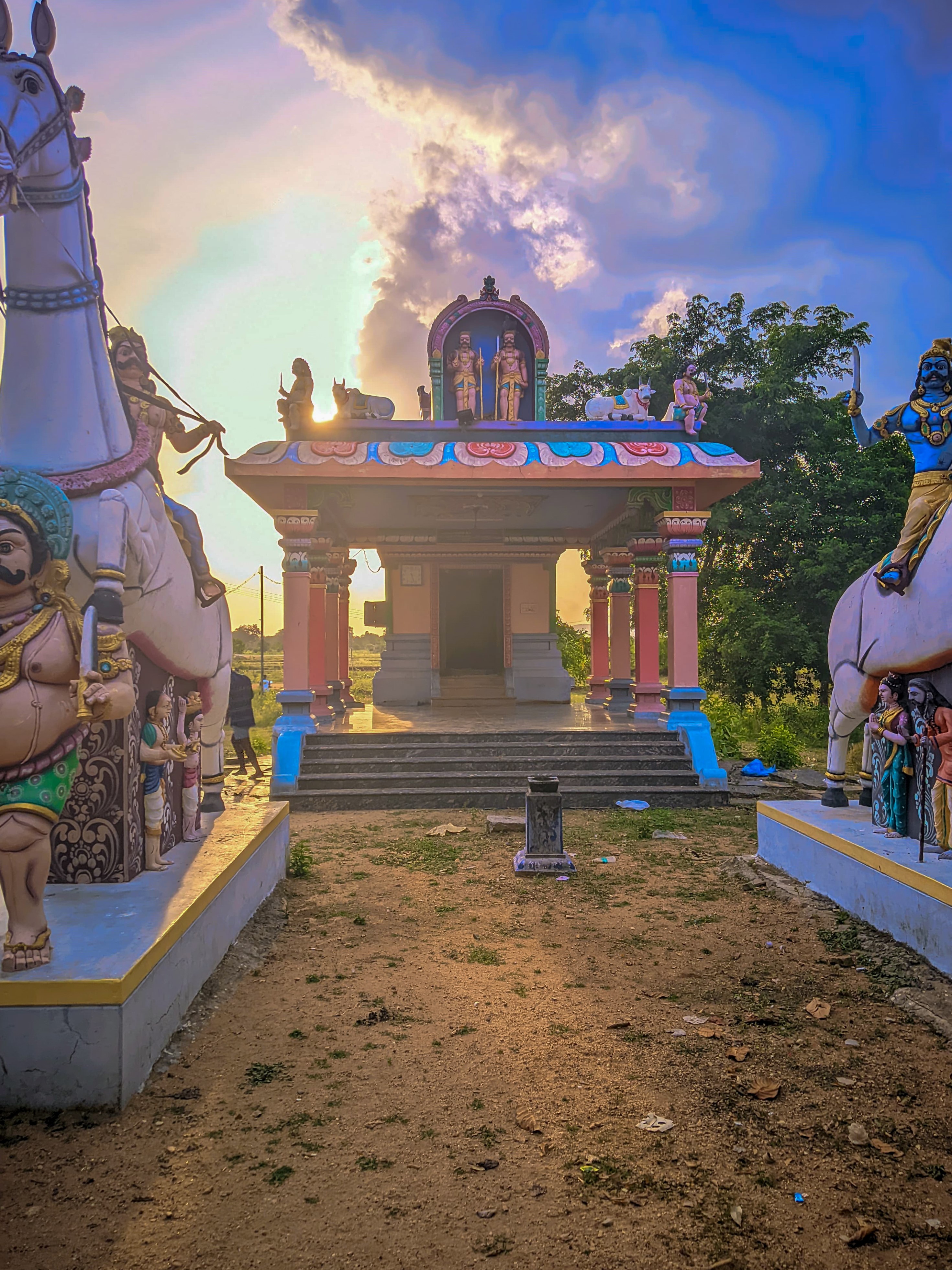
கோயிலின் நுழைவாயில் அருகில் இரண்டு பெரிய சுதை சிற்பங்கள் காணப்படுகின்றன. இவ்விரண்டு சிற்பங்களிலும் குதிரையின் மேல் கருப்புசாமி அமர்ந்துள்ளார். இக்குதிரைகளின் முன்னங்கால்களை பூதகணங்கள் தாங்கியுள்ளன. குதிரையின் காலுக்கு கீழ் பக்தர்கள் நின்றவாறு காட்சிப்படுத்தப்பட்டுள்ளனர்.
தல வரலாறு / கதைகள்
பல காலங்களுக்கு முன் இவ்வூரைச் சேர்ந்த ஒருவரும் அவரது மகனும் இரவில் கண்மாய் காவலுக்காக சென்றுள்ளனர். அப்பொழுது அவர்கள் பரணியின் மேல் உறங்கிக் கொண்டிருந்த பொழுது அந்த மகனை நல்ல பாம்பு தீண்டியது. பொழுது விடிந்ததும் இறந்து கிடந்த தன் மகனைப் பார்த்த அந்தத் தந்தையும் தன் உயிரை மாய்த்துக் கொண்டார். ஊர்க்காவலின் பொழுது இறந்த இவ்விருவரும் பின்னர் அவ்வூரைக் காக்கும் தெய்வங்களாக மாறினார் என்ற இந்த செவிவழிச் செய்தி கோடாங்கி அடிக்கும் பொழுது சாமியாடிய நபரால் சொல்லப்பட்டதாக இவ்வூர் பெரியவர் கூறுகிறார்.
கோயில் அமைப்பு
கருவறை மற்றும் எட்டு தூண்கள் கொண்ட முகமண்டப அமைப்பையுடைய அண்மைக்காலக் கோயில் கட்டிடம்
கூடுதல் விவரங்கள்
ஓலை குடிசையில் வைத்து பலகாலமாக வழிபடப்பட்ட இந்த சாமி சிலையை பின்னர் வேறு ஒரு இடத்தில் கோயில் கட்டி அங்கு நிறுவப்பட்டதாகக் கூறப்படுகிறது. இவ்வூரில் திருவிழாவின் போது காயம் கருப்பட்டி வைத்து, பள்ளையம் போடுவதாகவும் அதில் பல்லி ஏறி இறங்கி சென்ற பின்னரே ஊர் மக்கள் அனைவரும் உணவு உண்பதாகவும் கூறப்படுகிறது.
Temple Tree
Vanni tree (Persian mesquite/Ghaf tree/Prosopis cineraria)
Worship Timings
Worship services are held once a week.
Festivals details
Special worship is performed during the tamil month of Purattasi (mid-Sep to mid-Oct).
Rituals of worship / Methods
Rituals such as Ceremonial sprouting ritual (Tamil tradition where women sprout healthy grains in pots as an act of devotion) and Ceremonial carrying of milk pots are observed.
Inscription / Copper
No.
Sculptures
Two large stucco sculptures are found near the entrance of the temple. In both these sculptures, Karuppu Sami is seated on a horse. The forelegs of these horses are supported by the Bhutaganas. Devotees are depicted standing under the horse's legs.
Architecture
This recently constructed temple structure comprises of a sanctum and a eight-pillared Mukhamaṇḍapa structure.
Additional Information
It is said that this idol of the deity, which had been worshipped for a long time in a thatched hut, was later enshrined in a temple at a different location. During the festival, the people of the village follow a tradition of placing a sweet candy (called kaayam karuppatti) before the deity, along with a ceremonial feast (pallaiam poduvadhu). They then wait for a lizard to walk over the food. Only after the lizard has walked over the food do the villagers begin to partake in the meal.